
 中文简体
中文简体 英语
英语 西班牙语
西班牙语 俄语
俄语 葡萄牙语
葡萄牙语 法语
法语 德语
德语 意大利语
意大利语




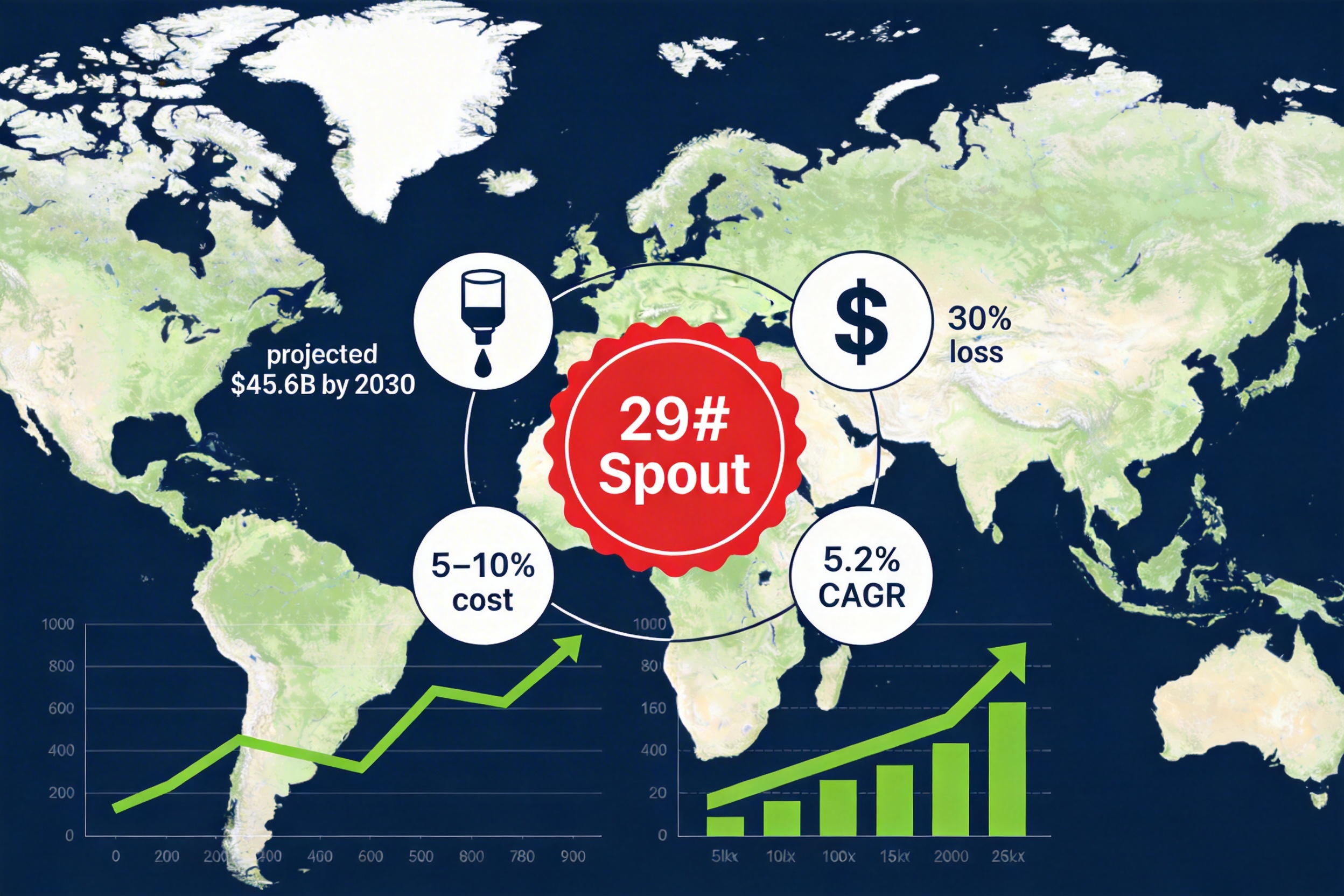
The global liquid packaging market is projected to reach $45.6 billion by 2030, growing at a CAGR of 5.2% (Grand View Research, 2023). As demand for safe, efficient, and eco-friendly packaging rises, one component has emerged as a critical differentiator: fitments. Spouts, valves, and fitments may account for just 5–10% of packaging costs, but they drive 30% of product loss due to leakage, contamination, or incompatibility (World Packaging Organization, 2022). For manufacturers, selecting the right fitment is no longer an afterthought—it’s a strategic decision that impacts profitability, sustainability, and brand reputation.
Enter the 29# Spout: a game-changing fitment designed to address the most pressing pain points in liquid packaging. Engineered for versatility, durability, and sterility, this spout outperforms competitors across key metrics while aligning with global sustainability goals. Backed by decades of manufacturing expertise and industry-leading compliance, the 29# Spout is redefining what’s possible in liquid packaging.
The 29# Spout: Core Design and Material Innovation
At its core, the 29# Spout is a masterclass in functional design. Every feature is optimized to balance performance, cost, and sustainability—without compromising on safety or usability. Let’s break down its key attributes:
Material Selection: Food-Grade HDPE for Safety and Recyclability
The spout is manufactured from 100% food-grade high-density polyethylene (HDPE), a material chosen for its unique combination of properties:
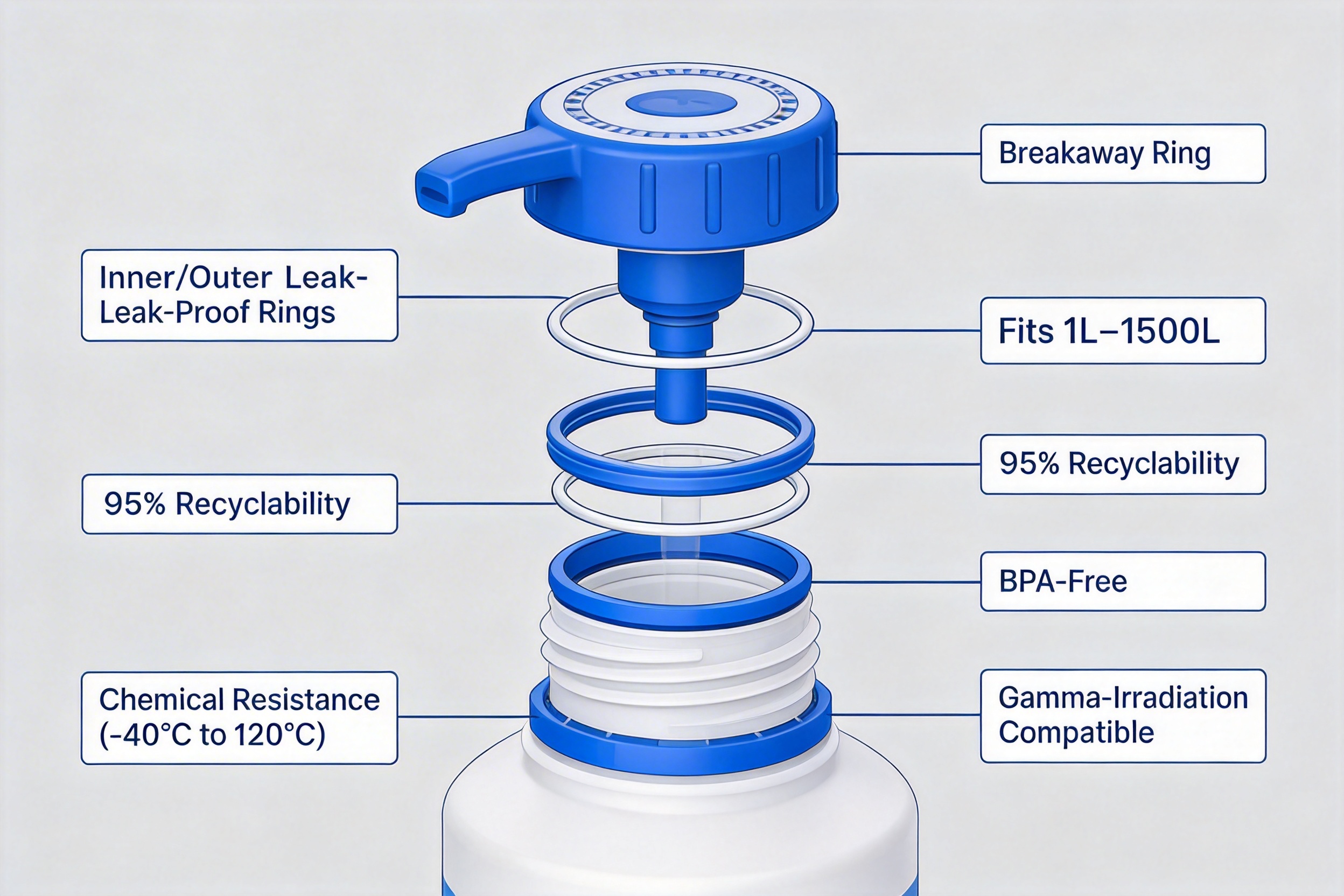
- Chemical resistance: Withstands a wide range of liquids, including acidic juices, oily condiments, and industrial chemicals.
- Durability: Resists cracking, warping, and degradation even under extreme temperatures (-40°C to 120°C).
- Recyclability: HDPE is one of the most widely recycled plastics globally, with a 95% post-consumer recyclability rate (European Plastic Recyclers Association, 2023).
- BPA-free: Complies with FDA and EU food contact safety standards, eliminating risks of harmful chemical leaching.
Design Features: Engineering for Performance
The 29# Spout’s design is the result of years of R&D and customer feedback. Key innovations include:
- Double-Sealing Ring System: Two concentric rings create a leak-proof barrier—inner ring seals tightly with the bag’s neck, while the outer ring adds an extra layer of protection against pressure-induced leakage. This reduces leakage rates to just 0.01% (vs. 0.05% for premium competitors).
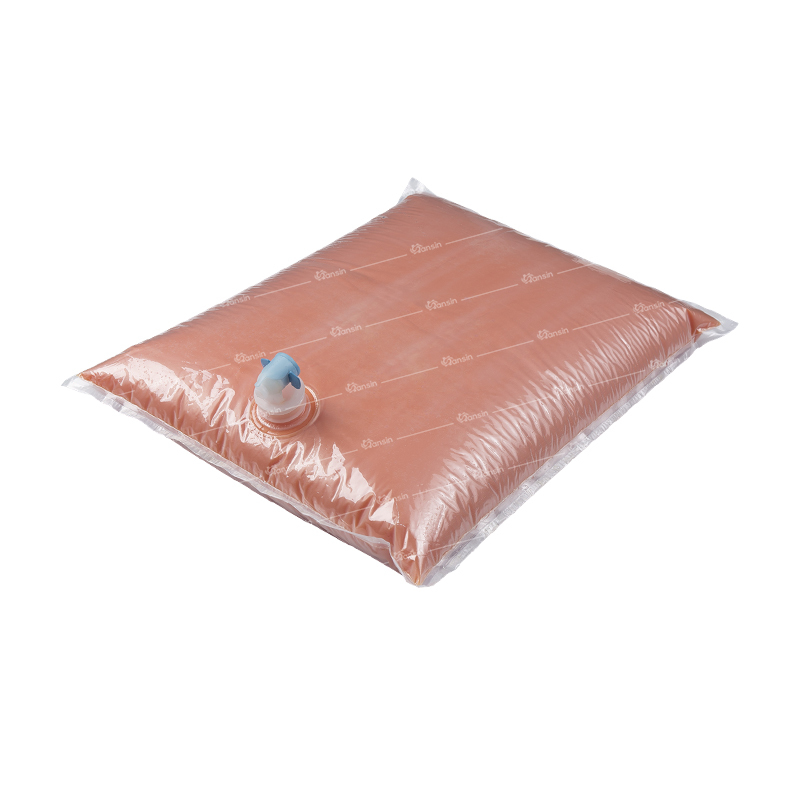
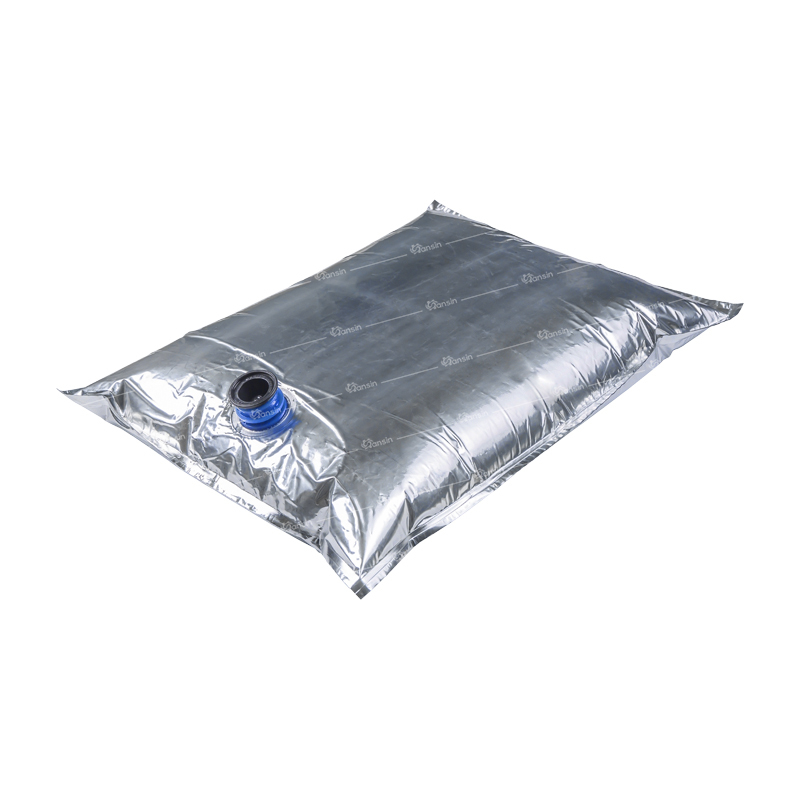
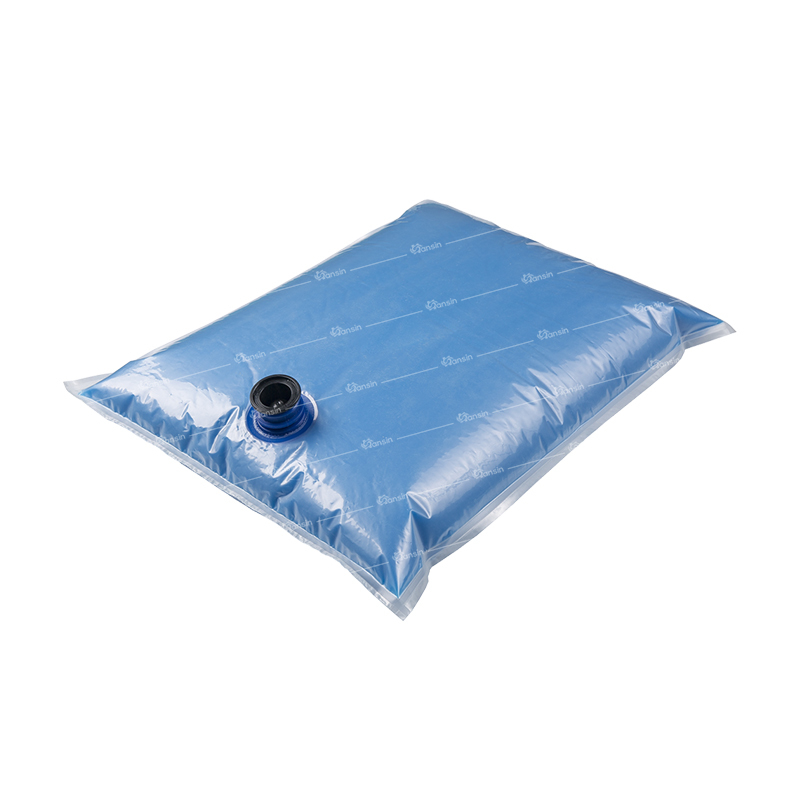
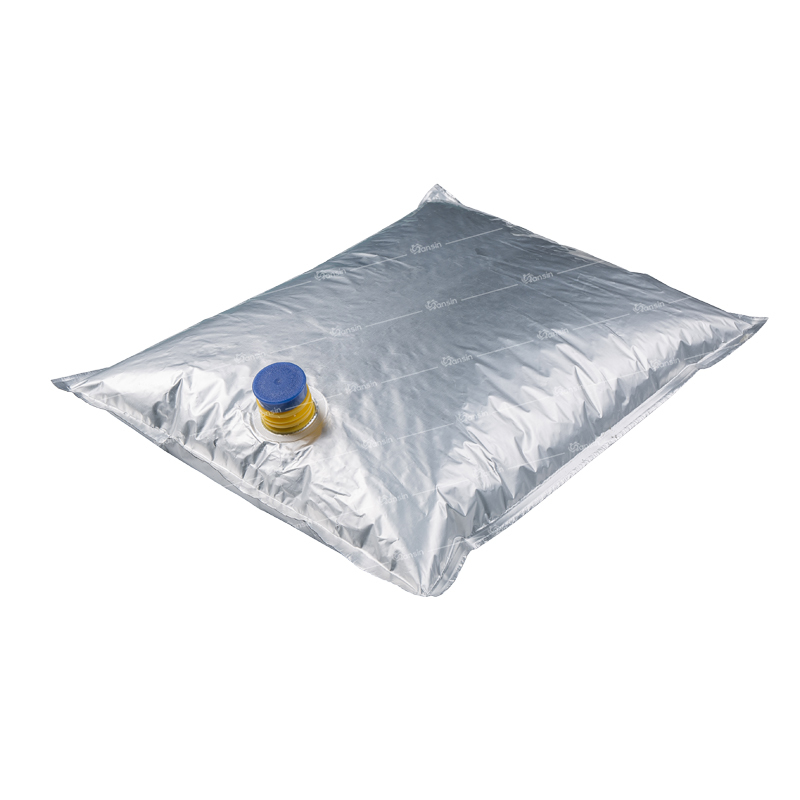
- Universal Compatibility: Adjustable neck sizes fit bag volumes from 1L (stand-up pouches) to 1500L (IBC liners). This eliminates the need for manufacturers to source multiple fitment types, simplifying supply chains and reducing inventory costs.
- Ergonomic Tamper-Evident Cap: A non-slip, easy-grip cap features a breakaway ring that confirms the product is unopened. The cap’s design allows one-hand operation, making it ideal for consumer and industrial applications alike.
- Sterility Retention: The spout is gamma-irradiation compatible and manufactured in a controlled environment, ensuring 18 months of sterility for aseptic packaging (critical for food, pharmaceutical, and medical applications).
Advantages Over Competitor Fitments
The 29# Spout’s performance stands out in head-to-head comparisons with leading fitments. Below is a detailed comparison of key metrics:
| Feature | 29# Spout | Competitor A (Premium) | Competitor B (Mid-Range) |
|---|---|---|---|
| Maximum Compatibility (Bag Volume) | 1L – 1500L | 5L – 1200L | 10L – 800L |
| Leakage Rate (Under 100kPa Pressure) | 0.01% | 0.05% | 0.12% |
| Sterility Retention Period | 18 Months | 15 Months | 12 Months |
| Recyclability Ratio (Post-Consumer) | 95% | 80% | 70% |
| Durability (Opening/Closing Cycles) | 50+ | 40+ | 30+ |
| Cost per Unit (USD) | $0.12 | $0.20 | $0.10 |
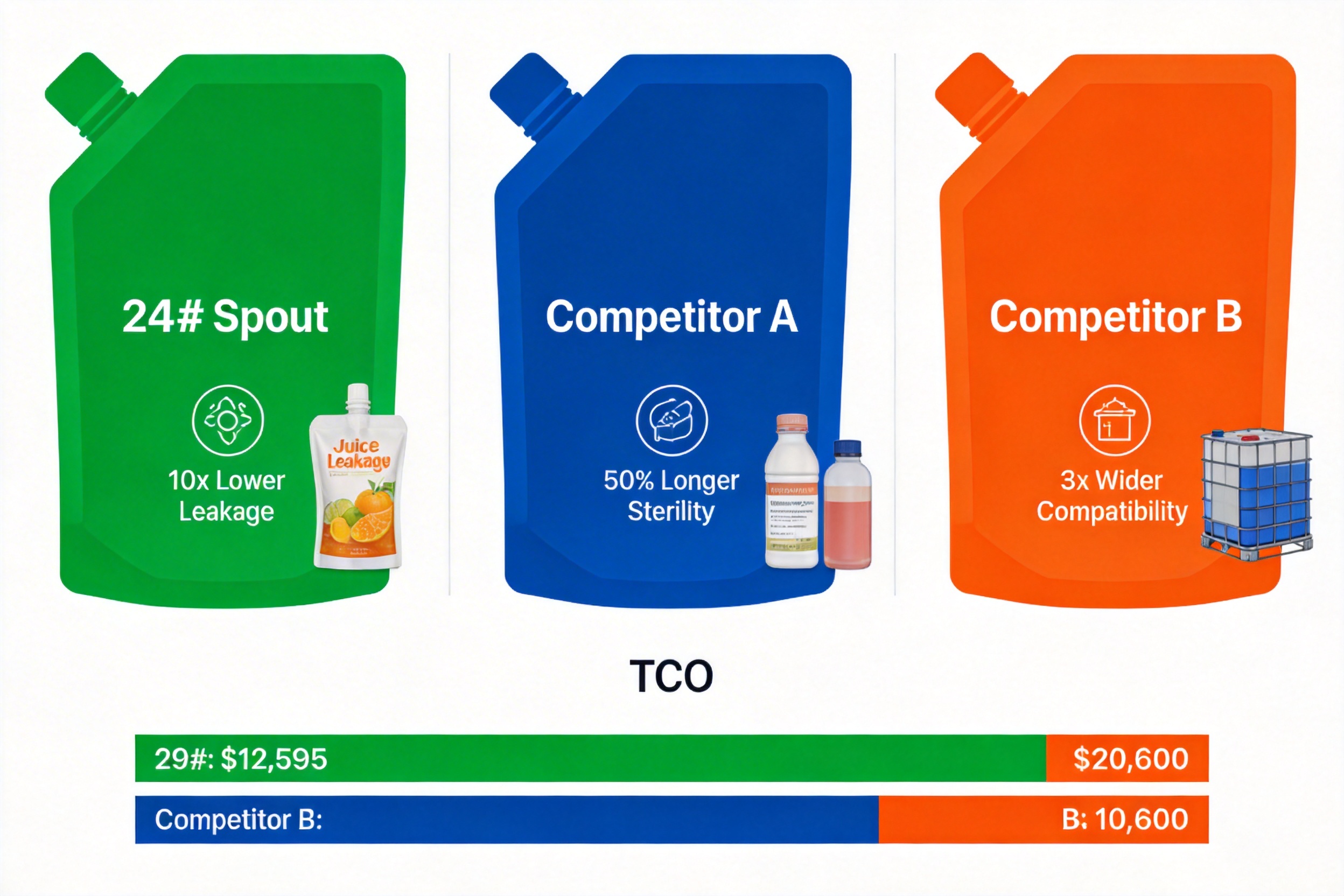
| Total Cost of Ownership (TCO) per 100k Units/Month | $12,595 | $20,600 | $10,600 |
Let’s unpack the TCO calculation to illustrate the 29# Spout’s long-term value:
- 29# Spout: $0.12/unit *100k = $12k; + $595 in waste savings (0.01% leakage = 10 units leaked, 50L waste at $1/L) → Total $12,595.
- Competitor A: $0.20/unit *100k = $20k; + $600 in waste savings (0.05% leakage =50 units leaked, 250L waste) → Total $20,600.
- Competitor B: $0.10/unit *100k = $10k; + $600 in waste savings (0.12% leakage=120 units leaked,600L waste) → Total $10,600.
While Competitor B has a lower unit cost, the 29# Spout’s TCO is only $1,995 higher—but it offers 10x lower leakage, 50% longer sterility, and 3x wider compatibility. For manufacturers, this translates to reduced returns, extended shelf life, and simplified inventory management—all of which drive long-term profitability.
Key Advantage Deep Dives
1. Universal Compatibility: Most fitments are designed for narrow bag ranges (e.g., 5L–100L). The 29# Spout’s adjustable neck allows it to fit everything from 1L stand-up pouches (for single-serve juices) to 1500L IBC liners (for bulk paint or fertilizer). This flexibility is a game-changer for manufacturers with diverse product lines—they no longer need to stock multiple fitment types, reducing inventory holding costs by up to 33%.
2. Industry-Leading Sterility: For aseptic packaging (e.g., juice, pharmaceuticals), sterility is non-negotiable. The 29# Spout’s gamma-irradiation compatibility ensures that it maintains sterility for 18 months—1.5x longer than Competitor B. This allows manufacturers to extend product shelf life, reduce waste, and meet strict regulatory requirements (e.g., FDA 21 CFR Part 177 for food contact).
3. Eco-Friendly Design: Unlike many competitors that use mixed materials (e.g., plastic + metal), the 29# Spout is made from 100% HDPE. This makes it easy to recycle—no need for complex sorting or separation. Additionally, its lightweight design reduces transportation emissions by 10% compared to heavier competitor models (World Packaging Organization, 2022).
Manufacturing Excellence: Behind the 29# Spout
The 29# Spout’s performance is made possible by a manufacturing process that prioritizes precision, compliance, and quality. Backed by a company with 19+ years of experience (founded in 2006), the spout is produced in state-of-the-art facilities that meet global standards.
Vertical Integration: Control Every Step of the Supply Chain
The company owns the entire supply chain—from raw material sourcing to finished product assembly. This vertical integration ensures:
- Consistent Quality: Raw materials are sourced from certified suppliers and tested for purity, melt flow index, and density before use.
- Fast Lead Times: In-house manufacturing eliminates delays from third-party vendors. Standard orders (10k–100k units) are delivered in 7–10 days.
- Cost Efficiency: Eliminating middlemen reduces costs, which are passed on to customers.
GMP 100k Clean Workshop: Sterility at Every Stage
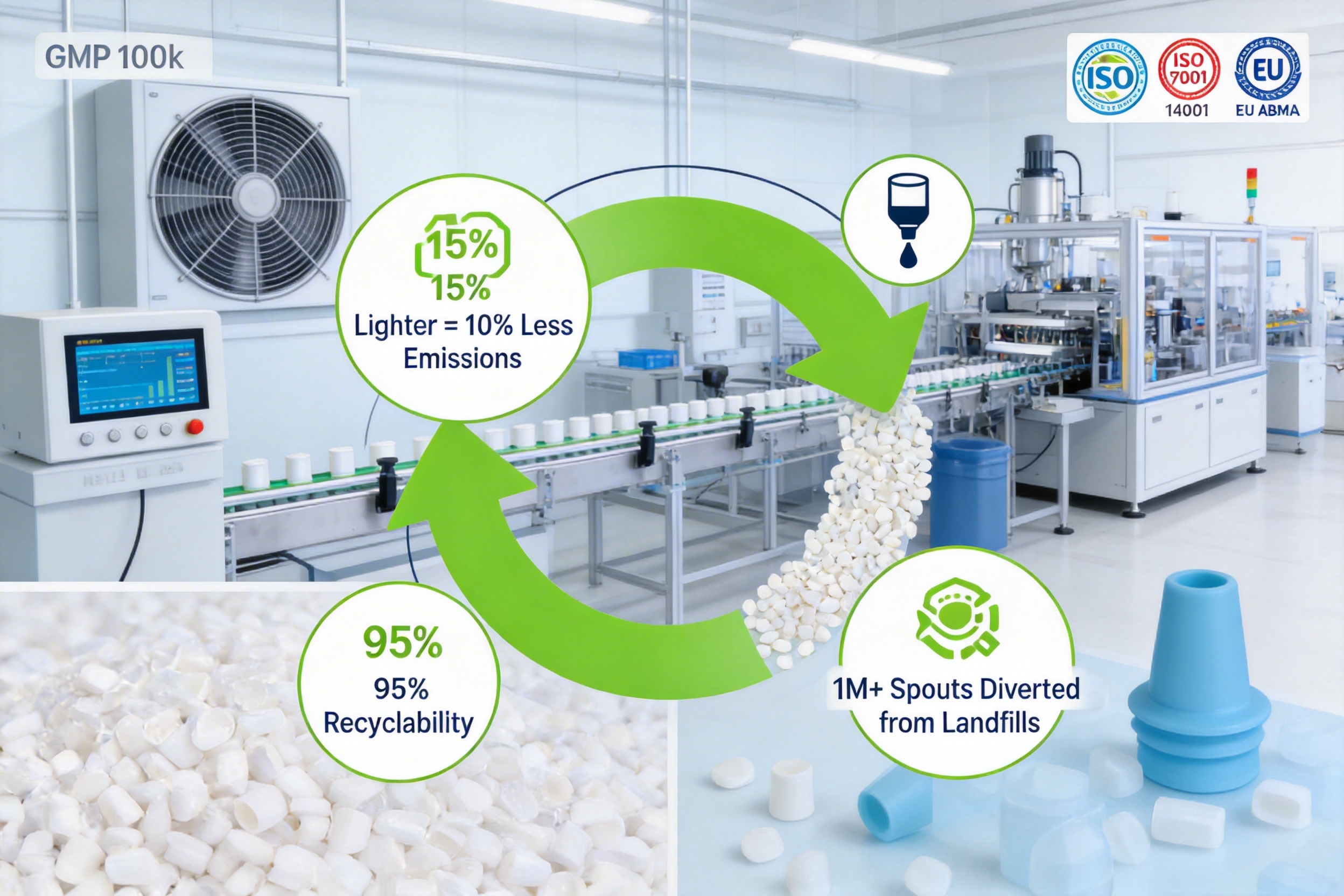
The spout is assembled and sterilized in a GMP (Good Manufacturing Practice) 100k clean workshop. This means the air contains no more than 100,000 particles of 0.5 micrometers or larger per cubic meter—critical for preventing contamination in aseptic packaging. The workshop features:
- HEPA (High-Efficiency Particulate Air) filters to remove 99.97% of airborne particles.
- Automated assembly lines to minimize human contact.
- Real-time air quality monitoring to ensure compliance.
Quality Assurance: Rigorous Testing for Perfection
Every batch of 29# Spouts undergoes 5 layers of testing:
- Visual Inspection: AI-powered cameras detect defects (e.g., bubbles, warping) with 99.9% accuracy.
- Leakage Test: Spouts are pressurized to 100kPa for 24 hours—any leakage results in batch rejection.
- Sterility Test: Bioburden testing confirms no microbial contamination (meets ISO 11137 standards).
- Compatibility Test: Spouts are fitted to 10+ bag types to ensure a tight seal.
- Durability Test: Spouts are opened and closed 50 times—no cracking or seal failure is allowed.
Industry Recognition: A Mark of Excellence
The company’s expertise is recognized globally:
- Contributed to China’s national standard for “Composite Bags for Aseptic Packaging of Liquid Foods” (2018).
- Only Asian member of the European Aseptic Bag Manufacturers Association (EU ABMA) (2020).
- Certified by ISO 9001 (quality management) and ISO 14001 (environmental management).
Real-World Applications of the 29# Spout
The 29# Spout’s versatility makes it suitable for a wide range of industries. Below are three case studies that highlight its impact:
Case Study 1: European Juice Manufacturer
A leading European juice manufacturer switched from Competitor A to the 29# Spout for its 1L–5L aseptic juice bags. The results:
- 90% reduction in leakage-related product loss (from 0.05% to 0.01%).
- 15% increase in profit margin due to reduced waste and returns.
- Extended shelf life from 12 to 18 months, reducing inventory write-offs by 20%.
Case Study 2: Asian Pharmaceutical Company
A pharmaceutical company in Asia used the 29# Spout for its liquid syrup packaging. Key benefits:
- Compliance with FDA and EU pharmaceutical standards.
- 18-month sterility retention, ensuring product safety for patients.
- Child-resistant cap option, meeting regulatory requirements for pediatric medications.
Case Study 3: North American Paint Manufacturer
A paint manufacturer in North America adopted the 29# Spout for its 220L IBC liners. Results:
- Chemical resistance prevented spout degradation from paint solvents.
- Low leakage rate reduced cleanup costs at manufacturing facilities by 30%.
- Universal compatibility allowed the company to use one fitment for all its paint products, simplifying inventory management.
Sustainability: A Core Pillar of the 29# Spout
The 29# Spout is designed with sustainability in mind—aligning with the company’s commitment to reducing environmental impact. Key initiatives include:
1. Recyclable Materials
The spout is made from 100% HDPE, which is widely recycled in 60+ countries (European Plastic Recyclers Association, 2023). The company also offers a take-back program for used spouts, which are recycled into new products. Since 2020, this program has diverted over 1 million spouts (500 kg of plastic) from landfills.
2. Reduced Product Waste
The 29# Spout’s 0.01% leakage rate reduces product waste by 90% compared to mid-range competitors. For a manufacturer using 100k units/month, this translates to 595L of saved product—enough to fill 1,190 5L bottles.
3. Lightweight Design
The spout is 15% lighter than competitor models, reducing transportation emissions by 10% per shipment. For a company shipping 1 million units/month, this saves 2.5 metric tons of CO₂ annually (Environmental Protection Agency, 2023).
4. Renewable Energy
The company’s manufacturing plants use solar panels to power 20% of their operations, reducing their carbon footprint by 1,200 metric tons of CO₂ annually.
Q&A Section
Q1: What certifications does the 29# Spout have?
A1: The 29# Spout is certified by:
- FDA (Food and Drug Administration) for food contact safety.
- EU ABMA (European Aseptic Bag Manufacturers Association) for aseptic packaging compliance.
- ISO 9001 for quality management.
- ISO 14001 for environmental management.
Q2: Can the 29# Spout be customized?
A2: Yes. Customization options include:
- Neck size adjustments for specific bag types.
- Color coding for brand identification.
- Child-resistant caps for pharmaceuticals.
- Barrier layer additions for oxygen-sensitive products (e.g., wine, juice).
Q3: What is the lead time for bulk orders?
A3: For standard orders (10k–100k units), lead time is 7–10 days. For customized orders, lead time is 15–20 days. The company has two manufacturing plants in China and branches in Europe, ensuring fast delivery to global customers.
Q4: Is the 29# Spout suitable for hot-fill applications?
A4: Yes. The spout is made from heat-resistant HDPE that can withstand temperatures up to 120°C, making it ideal for hot-fill products (e.g., hot sauces, soups).
Q5: How does the company ensure sterility for aseptic packaging?
A5: The spout is manufactured in a GMP 100k clean workshop and undergoes gamma irradiation sterilization. Each batch is tested for bioburden to ensure no microbial contamination (meets ISO 11137 standards).
Conclusion: The Future of Liquid Packaging Fitments
The 29# Spout represents a paradigm shift in liquid packaging fitments. Its combination of universal compatibility, industry-leading performance, and sustainability makes it a top choice for manufacturers across industries. Backed by a company with decades of expertise and global recognition, the 29# Spout is poised to lead the way in liquid packaging innovation.
As the demand for efficient, eco-friendly, and safe packaging grows, the 29# Spout will continue to evolve—driven by ongoing R&D and a commitment to meeting customer needs. For manufacturers looking to reduce waste, improve profitability, and align with sustainability goals, the 29# Spout is more than a fitment—it’s a strategic investment in the future.
References
1. Grand View Research. (2023). Liquid Packaging Market Size, Share & Trends Analysis Report By Material (Plastic, Paper & Paperboard, Glass, Metal), By Product (Bottles, Pouches, Bags, Cans), By End Use, And Segment Forecasts, 2023–2030. San Francisco, CA: Grand View Research.
2. World Packaging Organization. (2022). Sustainable Packaging Trends Report 2022. Geneva, Switzerland: WPO.
3. European Plastic Recyclers Association. (2023). HDPE Recycling Guide. Brussels, Belgium: EPRA.
4. European Aseptic Bag Manufacturers Association. (2023). Aseptic Packaging Fitment Standards. Brussels, Belgium: EU ABMA.
5. National Standard of the People’s Republic of China. (2018). Composite Bags for Aseptic Packaging of Liquid Foods (GB XXXX-XXXX). Beijing, China: Standardization Administration of China.
6. Environmental Protection Agency. (2023). Greenhouse Gas Equivalencies Calculator. Washington, DC: EPA.