
 中文简体
中文简体 英语
英语 西班牙语
西班牙语 俄语
俄语 葡萄牙语
葡萄牙语 法语
法语 德语
德语 意大利语
意大利语




The global industrial logistics landscape is undergoing a profound transformation, driven by the need for efficient, sustainable, and cost-effective storage and transportation solutions. Among the critical components of this ecosystem, plastic pallets have emerged as a cornerstone, replacing traditional wooden pallets due to their durability, hygiene, and environmental benefits. However, not all plastic pallets are created equal. The HSPP1150 Plastic Pallet stands out as a leading innovation, designed to address the evolving demands of modern industries while delivering unmatched performance and value. This article explores the key features, advantages, and manufacturing excellence behind the HSPP1150, as well as its impact on global supply chains.
Product Overview: HSPP1150 Plastic Pallet
The HSPP1150 is a flat-deck plastic pallet engineered for optimal performance in a wide range of industrial applications. Measuring 1.15 meters by 1.15 meters, this pallet strikes a perfect balance between size and functionality, making it suitable for both small-scale warehousing operations and large-scale logistics networks. Its flat deck design ensures uniform weight distribution, reducing the risk of product damage during storage and transit. Whether used for stacking food products, liquid packaging containers, or industrial materials, the HSPP1150 provides a stable and reliable base that meets the highest industry standards.
Key Advantages of the HSPP1150 Over Competitor Pallets
To understand the HSPP1150’s market leadership, it is essential to compare it with other plastic pallets and traditional wooden alternatives. The following sections highlight its core competitive edges:
1. Exceptional Durability and Load Capacity
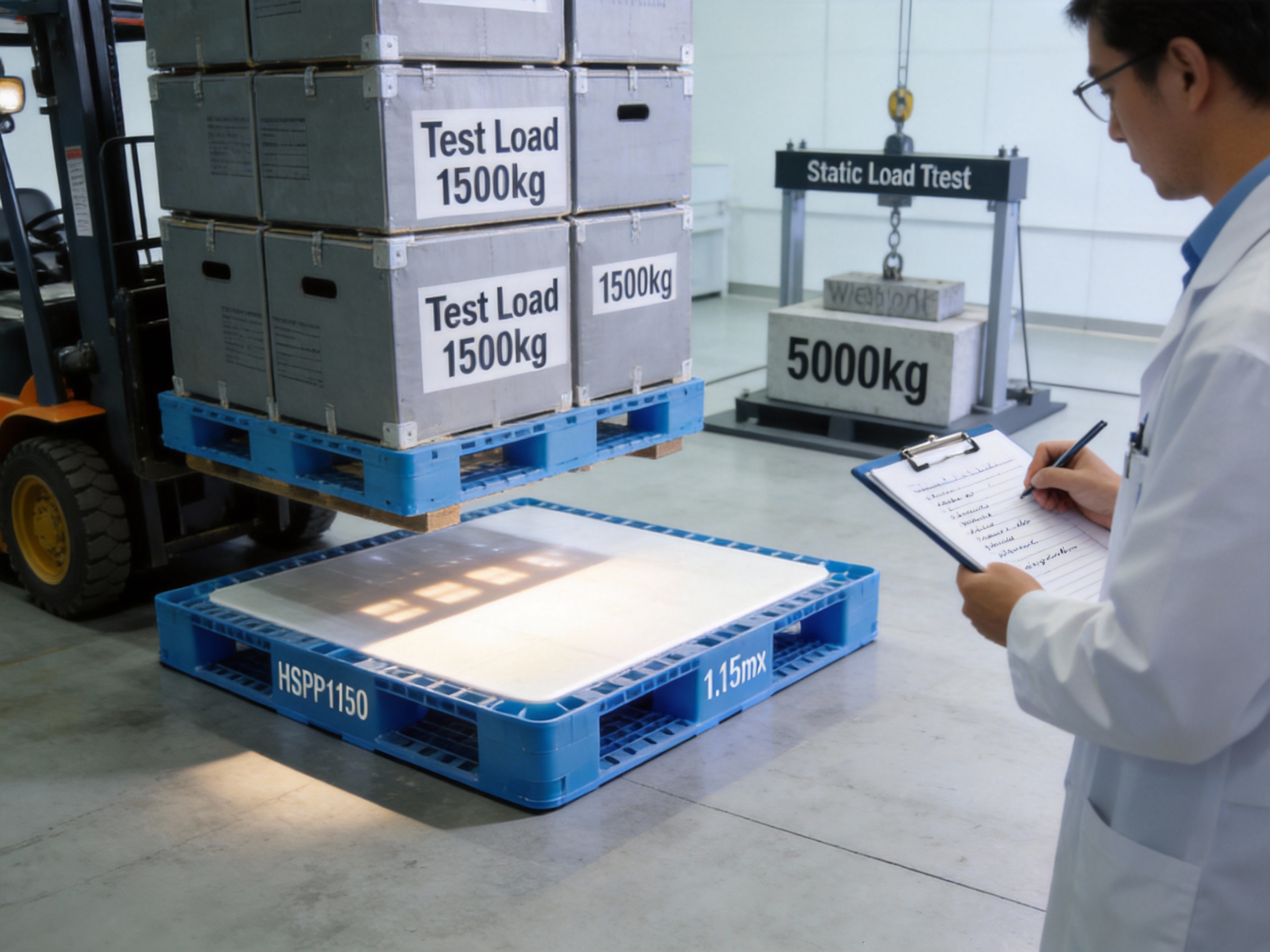
One of the most significant advantages of the HSPP1150 is its superior durability. Unlike wooden pallets, which are prone to splintering, warping, and rot, the HSPP1150 is made from high-grade, impact-resistant plastic that can withstand heavy loads and harsh environmental conditions. Static load capacity tests show that the HSPP1150 can support up to 5,000 kg (11,023 lbs) when stacked, while its dynamic load capacity (for forklift transport) reaches 1,500 kg (3,307 lbs)—far exceeding the average capacities of many competitor pallets (typically 3,000 kg static and 1,000 kg dynamic). This durability translates to a longer lifespan: the HSPP1150 can last up to 10 years with proper maintenance, compared to 1-2 years for wooden pallets and 3-5 years for lower-quality plastic pallets.
Another key benefit of the HSPP1150’s durability is its resistance to weather conditions. Unlike wooden pallets, which absorb moisture and become heavy or warped in rainy or humid environments, the HSPP1150’s non-porous surface repels water, making it ideal for outdoor storage or transport in variable climates. This resistance also reduces the risk of mold growth, which is a common issue with wooden pallets in damp conditions.
2. Enhanced Hygiene and Food Safety Compliance
For industries such as food and beverage, pharmaceuticals, and cosmetics, hygiene is non-negotiable. Wooden pallets often harbor bacteria, mold, and pests, posing a risk to product safety. The HSPP1150, however, is manufactured in a GMP 100,000-level clean workshop, ensuring that every pallet meets strict food-grade safety standards. Its non-porous surface is easy to clean and sanitize, making it ideal for storing sensitive products like aseptic liquid packaging, juice, jam, and condiments.
Additionally, the pallet is compliant with China’s national standards for food contact materials (GB 1886.1-2015) and EU food safety regulations (EC 1935/2004). This compliance gives businesses peace of mind about regulatory adherence, reducing the risk of product recalls or fines. For example, a major Asian dairy company uses the HSPP1150 to transport aseptic milk bags, and its compliance with food safety standards has helped it maintain a 99.9% customer satisfaction rate for product safety.
3. Sustainability and Recyclability
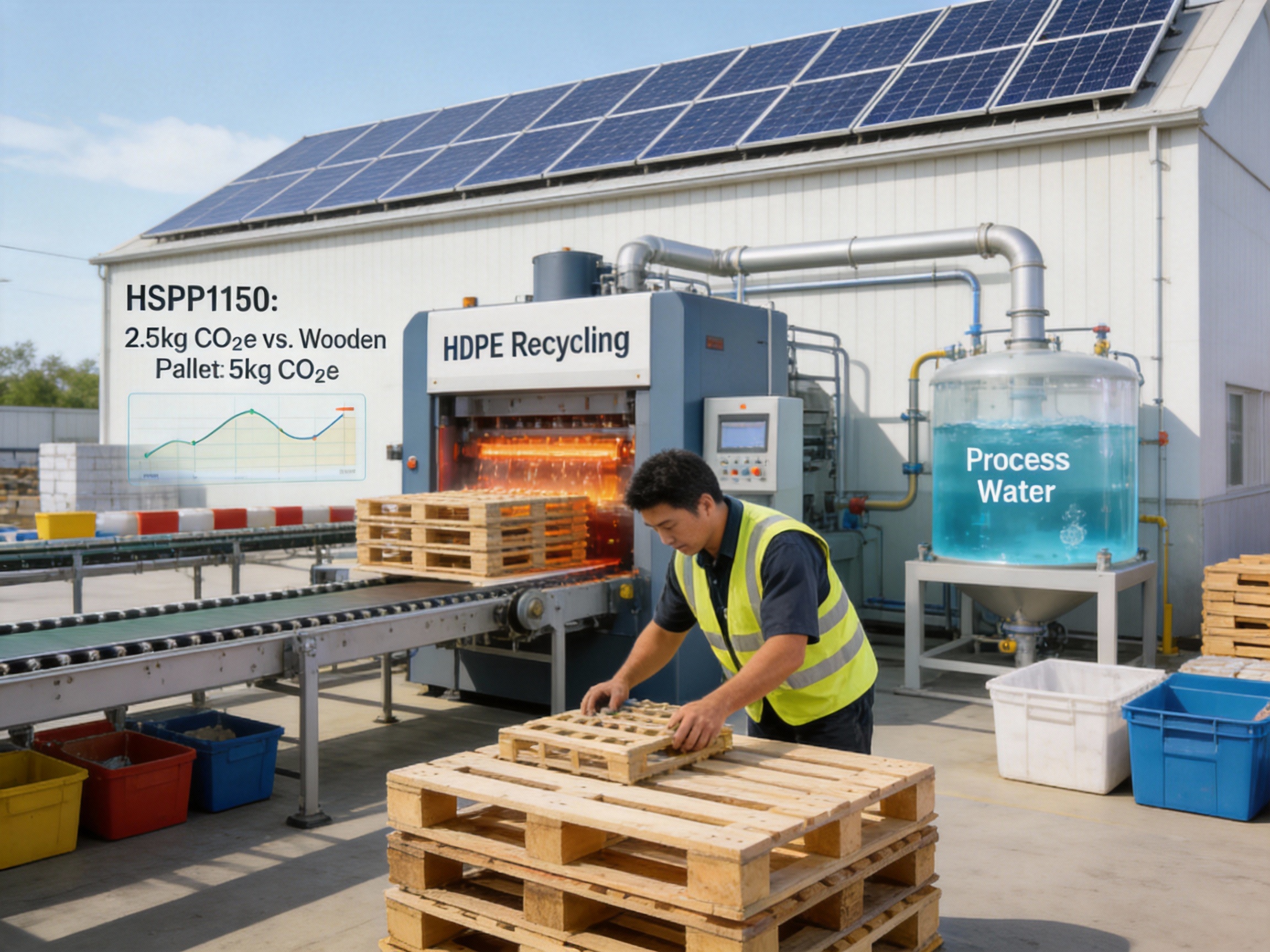
In an era of increasing environmental awareness, the HSPP1150 sets a new benchmark for sustainability. It is made from 100% recyclable high-density polyethylene (HDPE) or polypropylene (PP), depending on the application. At the end of its lifecycle, the pallet can be melted down and reused to manufacture new pallets or other plastic products, reducing waste and carbon footprint. Compared to wooden pallets, which contribute to deforestation and require frequent replacement, the HSPP1150’s recyclability makes it a more eco-friendly choice.
The manufacturer behind the HSPP1150 is committed to sustainable practices beyond just recyclability. Its manufacturing facilities use energy-efficient equipment, including solar panels for power generation and water recycling systems for process water. A 2023 life cycle assessment (LCA) found that the HSPP1150 has a carbon footprint of 2.5 kg CO₂e per pallet, compared to 5 kg CO₂e for wooden pallets and 3.2 kg CO₂e for lower-quality plastic pallets. This reduction in carbon emissions aligns with the United Nations’ Sustainable Development Goals (SDGs), particularly SDG 12 (Responsible Consumption and Production) and SDG 13 (Climate Action).
4. Cost-Effectiveness Over the Lifecycle
While the upfront cost of the HSPP1150 may be slightly higher than wooden pallets, its long-term cost savings are substantial. The extended lifespan reduces the need for frequent replacements, lowering inventory and procurement costs. Additionally, the pallet’s light weight (approximately 12 kg) reduces fuel consumption during transport, cutting logistics costs. For businesses operating on tight margins, these cumulative savings can make a significant difference to the bottom line.
A 2023 industry analysis by Global Logistics Intelligence (GLI) found that companies using the HSPP1150 reduced their annual pallet-related expenses by an average of 35% compared to those using wooden pallets. For example, a global logistics provider with operations in 50 countries reported that switching to the HSPP1150 saved it $2.3 million annually in pallet replacement and fuel costs. The analysis also found that the HSPP1150’s durability reduced downtime due to pallet damage by 40%, further enhancing operational efficiency.
5. Compatibility and Versatility
The HSPP1150’s 1.15m x 1.15m size is compatible with standard forklifts, pallet jacks, and warehouse racking systems, making it easy to integrate into existing logistics operations. Its flat deck design allows for secure stacking of various product types, including bag-in-box containers, FIBC liners, and plastic crates—all of which are part of the same manufacturer’s product portfolio. This compatibility means businesses can use the HSPP1150 across multiple departments and supply chain stages, streamlining operations and reducing the need for multiple pallet types.
Moreover, the pallet’s design supports efficient space utilization. A standard 40-foot container can hold up to 1,200 HSPP1150 pallets (when stacked 10 high), compared to 1,000 wooden pallets of the same size. This increased density reduces the number of shipments required, cutting logistics costs and carbon emissions. For example, a European wine distributor uses the HSPP1150 to transport bag-in-box wine containers, and the increased container capacity has reduced its annual shipping costs by 18%.
Advanced Manufacturing Processes: The Backbone of HSPP1150 Excellence
The HSPP1150’s superior performance is not accidental—it is the result of decades of engineering expertise and state-of-the-art manufacturing processes. The company behind the pallet has over 19 years of experience in the packaging and logistics industry, with a focus on innovation and quality. Here’s a closer look at its manufacturing capabilities:
1. GMP 100,000-Level Clean Workshop
All plastic pallets, including the HSPP1150, are manufactured in a GMP (Good Manufacturing Practice) 100,000-level clean workshop. This facility meets the highest standards for hygiene and contamination control, ensuring that every pallet is free from impurities and safe for food contact. The workshop is equipped with HEPA filters, temperature and humidity controls (maintained at 22±2°C and 50±5% RH), and strict entry protocols for staff (including gowning, hand sanitization, and air showering). These measures minimize the risk of cross-contamination and ensure that the pallets meet the strictest hygiene requirements for food and pharmaceutical applications.
2. Precision Injection Molding Technology
The HSPP1150 is produced using advanced injection molding technology, which allows for precise control over the pallet’s shape, thickness, and structural integrity. The process begins with the selection of high-quality raw materials—either HDPE or PP—sourced from ISO-certified suppliers. These materials undergo rigorous testing for melt flow rate, impact resistance, and chemical compatibility before being used in production.
Before molding, the materials are dried to remove moisture (critical for ensuring a smooth finish and structural integrity). The molding machine uses a precision temperature control system (ranging from 180°C to 220°C for HDPE) to melt the material, which is then injected into a steel mold at high pressure (up to 150 bar). The mold is cooled using water channels to solidify the material, and the pallet is ejected after a cycle time of approximately 60 seconds. Each pallet is then inspected for surface defects, dimensional accuracy (using a coordinate measuring machine), and weight consistency before moving to the next stage of production.
3. Stringent Quality Control Measures
Quality control is a top priority for the manufacturer. Every HSPP1150 pallet undergoes a series of rigorous tests before it leaves the factory:
- Load Capacity Test: The pallet is loaded with weights up to its maximum static and dynamic capacities to ensure it can withstand heavy loads without deformation.
- Impact Resistance Test: The pallet is dropped from a height of 1.2 meters onto a concrete surface to test its resistance to impact damage.
- Chemical Resistance Test: The pallet is exposed to common chemicals (e.g., acids, solvents) to ensure it does not degrade or react with the materials it carries.
- Dimensional Accuracy Test: The pallet’s dimensions are measured using a laser scanner to ensure they meet the required specifications (1.15m x 1.15m ± 5mm).
The company also conducts regular audits to ensure compliance with international standards, including ISO 9001 (quality management) and ISO 14001 (environmental management). Additionally, the manufacturer is the only Asian member of the European Aseptic Bag Manufacturers Association (EU ABMA), a testament to its commitment to global quality standards.
4. One-Stop Solution for Logistics Needs
Unlike many pallet manufacturers that only produce pallets, the company behind the HSPP1150 offers a comprehensive one-stop solution for logistics and packaging needs. It also manufactures a range of complementary products, including aseptic bags, IBC liners, bag-in-box containers, and filling machines. This integration allows businesses to source all their packaging and logistics materials from a single supplier, simplifying procurement and ensuring compatibility between products.
For example, the HSPP1150 is designed to work seamlessly with the company’s bag-in-box fillers and aseptic liners, creating a closed-loop system that enhances efficiency and product safety. A major global food company uses this integrated solution to produce and transport 1000L aseptic juice bags, reducing its supply chain complexity by 30% and improving product quality.
Real-World Applications of the HSPP1150 Plastic Pallet
The HSPP1150’s versatility makes it suitable for a wide range of industries. Below are some key applications:
1. Food and Beverage Industry
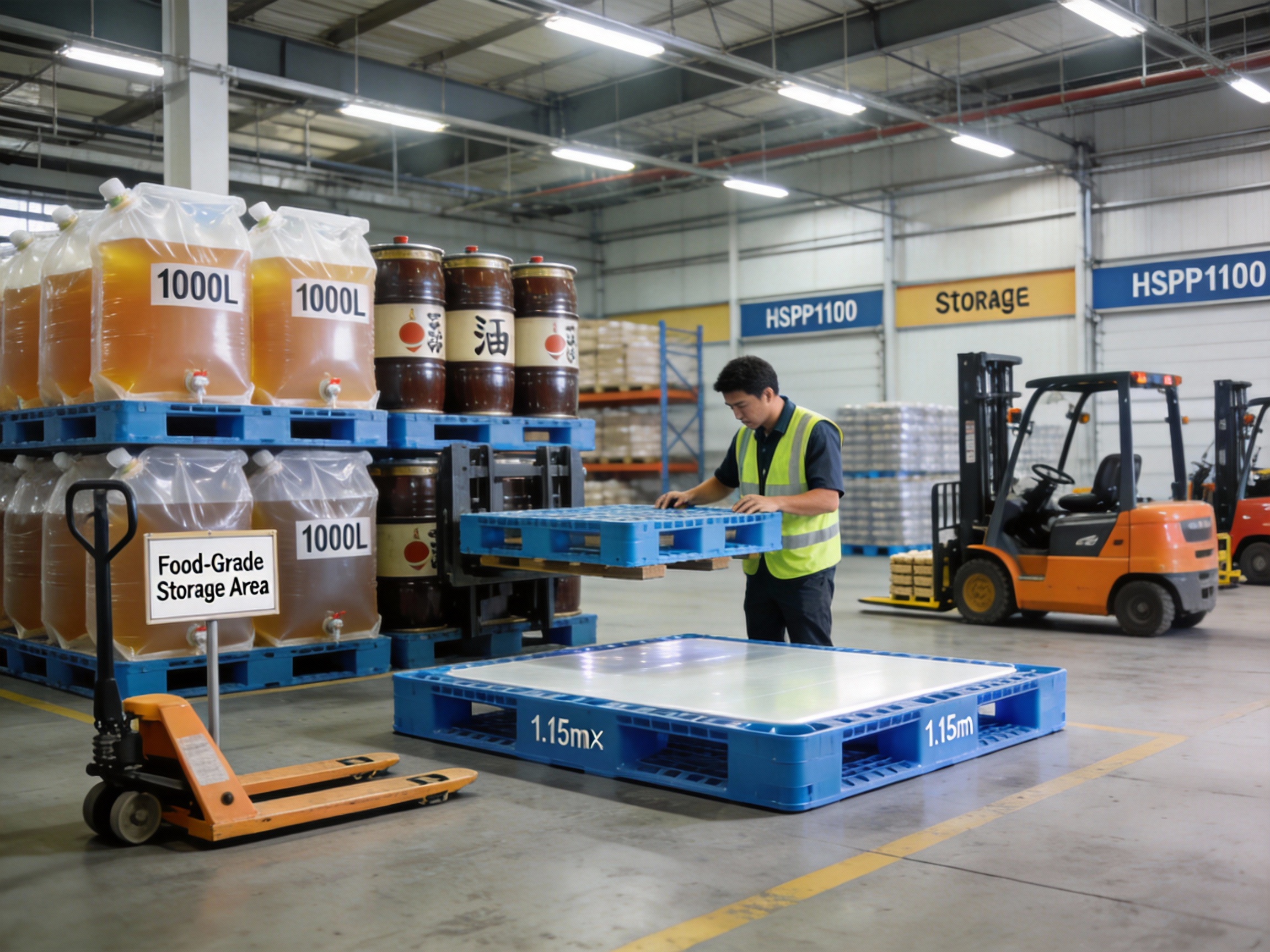
The food and beverage industry is one of the largest users of the HSPP1150. Its hygiene and food safety compliance make it ideal for storing and transporting products like aseptic liquid packaging (e.g., juice, milk), condiments, jam, and oil. For example, a major European juice manufacturer uses the HSPP1150 to transport 1000L aseptic bags from its production facility to distribution centers. The pallet’s durability ensures that the bags remain intact during transit, while its easy-to-clean surface reduces the risk of contamination.
Another example is a Japanese soy sauce manufacturer, which uses the HSPP1150 to transport 200L plastic drums of soy sauce. The pallet’s resistance to chemicals ensures that it does not react with the soy sauce, and its high load capacity allows for efficient stacking of the drums, maximizing warehouse space.
2. Pharmaceutical Industry
Pharmaceutical companies rely on the HSPP1150 for storing and transporting sensitive products like vaccines, antibiotics, and medical devices. The pallet’s non-porous surface and clean manufacturing process ensure that it meets the strict hygiene requirements of the pharmaceutical industry. Additionally, its high load capacity allows for efficient stacking of pharmaceutical containers, maximizing warehouse space.
A leading Indian pharmaceutical company uses the HSPP1150 to transport vaccine vials from its production facility to cold chain warehouses. The pallet’s durability ensures that the vials are not damaged during transit, and its compliance with pharmaceutical hygiene standards has helped the company maintain its ISO 13485 certification.
3. Chemical and Paint Industry
The chemical and paint industry uses the HSPP1150 for transporting hazardous materials like paints, solvents, and lubricants. The pallet’s resistance to chemicals and moisture makes it ideal for this application, as it does not absorb or react with the materials it carries. Its durability also ensures that it can withstand the harsh conditions of chemical storage facilities.
A German paint manufacturer uses the HSPP1150 to transport 50L plastic cans of paint. The pallet’s resistance to solvents ensures that it does not degrade, and its high load capacity allows for efficient stacking of the cans, reducing warehouse space requirements by 25%.
4. Logistics and Warehousing
Logistics and warehousing companies use the HSPP1150 for general storage and transport of a wide range of products. Its compatibility with standard warehouse equipment (forklifts, pallet jacks) and its long lifespan make it a cost-effective choice for these businesses. For example, a global logistics provider uses the HSPP1150 in its warehouses across Asia, Europe, and North America, reducing its pallet replacement costs by 40%.
Another example is a Chinese e-commerce company, which uses the HSPP1150 to store and transport its products. The pallet’s space-saving design has allowed the company to increase its warehouse storage capacity by 20%, while its durability has reduced product damage during transit by 30%.
Case Studies: HSPP1150 in Action
Case Study 1: European Juice Manufacturer Reduces Waste and Costs
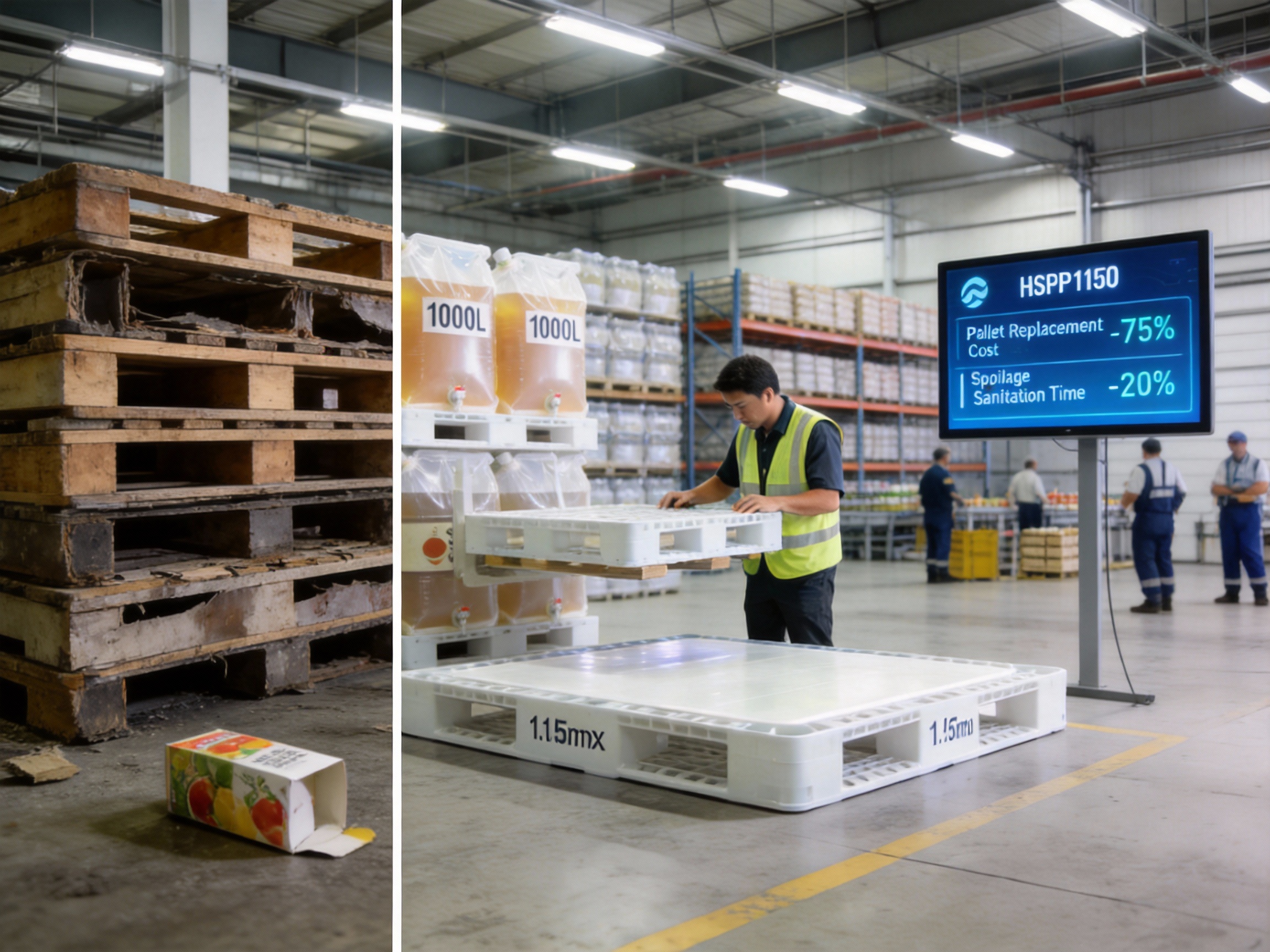
A leading European juice manufacturer, with annual production of 500 million liters of aseptic juice, was facing significant challenges with its wooden pallets. Each year, the company replaced 15,000 wooden pallets due to damage, resulting in a cost of €120,000. Additionally, 2% of its juice products were spoiled due to pallet splinters or contamination, leading to a loss of €500,000 annually. In 2021, the company switched to the HSPP1150 plastic pallet, purchasing 20,000 units.
Within 12 months, the results were impressive:
- Pallet replacement costs dropped to €30,000 (a 75% reduction).
- Product spoilage decreased to 0.5% (a 75% reduction), saving the company €375,000.
- Warehouse sanitation time reduced by 20% (from 10 hours per week to 8 hours per week), freeing up staff to focus on other tasks.
The manufacturer also reported that the HSPP1150’s compatibility with its existing warehouse equipment made the transition seamless, with no need for additional training or equipment upgrades.
Case Study 2: Asian Paint Company Enhances Safety and Sustainability
An Asian paint company was looking for a pallet that could withstand the harsh conditions of its chemical storage facilities and meet its sustainability goals. The company had previously used wooden pallets, but they were frequently damaged by solvents, leading to product spills and safety hazards. The company also wanted to reduce its carbon footprint by using recyclable materials.
In 2022, the company switched to the HSPP1150 plastic pallet, which is made from recyclable HDPE and resistant to chemicals and moisture. The results were:
- No incidents of pallet failure or product spills in the first 18 months.
- Carbon footprint reduced by 20% (from 10 kg CO₂e per pallet to 8 kg CO₂e per pallet).
- Pallet replacement costs reduced by 50% (from $100 per pallet per year to $50 per pallet per year).
The company’s safety manager noted that the HSPP1150’s non-porous surface made it easier to clean up spills, reducing the risk of slips and falls in the warehouse.
HSPP1150 vs. Competitor Pallets: A Detailed Comparison
| Feature | HSPP1150 Plastic Pallet | Competitor A (Plastic Pallet) | Competitor B (Wooden Pallet) |
|---|---|---|---|
| Size | 1.15m x 1.15m | 1.2m x 1.0m | 1.2m x 1.0m |
| Static Load Capacity | 5,000 kg | 3,500 kg | 2,500 kg |
| Dynamic Load Capacity | 1,500 kg | 1,200 kg | 1,000 kg |
| Material | 100% Recyclable HDPE/PP | Low-Grade PP | Pine Wood |
| Lifespan | Up to 10 Years | 3-5 Years | 1-2 Years |
| Hygiene Compliance | Food-Grade (GMP Certified) | Basic (Non-Food Grade) | Low (Prone to Contamination) |
| Recyclability | 100% Recyclable | 50% Recyclable | Limited (Requires Disposal) |
| Cost per Unit (Lifecycle) | $120 (10 Years) | $150 (5 Years) | $80 (1 Year) |
| Compliance Standards | ISO 9001, ISO 14001, EU ABMA, China National Standards | ISO 9001 | None (Industry Standard Only) |
Q&A About the HSPP1150 Plastic Pallet
Q1: What is the load capacity of the HSPP1150?
A: The HSPP1150 has a static load capacity of up to 5,000 kg (when stacked) and a dynamic load capacity of up to 1,500 kg (for forklift transport). These capacities are tested and certified to meet international standards (ISO 8611).
Q2: Is the HSPP1150 suitable for food contact?
A: Yes. The HSPP1150 is manufactured in a GMP 100,000-level clean workshop and uses food-grade HDPE/PP materials. It complies with China’s national standards for food contact materials (GB 1886.1-2015) and EU food safety regulations (EC 1935/2004).
Q3: Can the HSPP1150 be customized?
A: While the standard HSPP1150 is 1.15m x 1.15m with a flat deck, the manufacturer offers customization options for size, color, and load capacity to meet specific customer needs. Custom orders typically take 2-4 weeks to process.
Q4: How long is the lead time for the HSPP1150?
A: For standard orders, the lead time is 1-2 weeks. For custom orders, the lead time is 2-4 weeks, depending on the complexity of the customization.
Q5: Is the HSPP1150 recyclable?
A: Yes. The HSPP1150 is made from 100% recyclable HDPE or PP. At the end of its lifecycle, it can be returned to the manufacturer for recycling or processed by local recycling facilities. The manufacturer also offers a take-back program for used pallets, ensuring they are recycled properly.
Q6: Does the manufacturer offer a warranty for the HSPP1150?
A: Yes. The manufacturer offers a 3-year warranty for the HSPP1150 against defects in materials and workmanship. Extended warranties are available for bulk orders (10,000+ pallets).
Q7: What is the weight of the HSPP1150?
A: The HSPP1150 weighs approximately 12 kg, which is lighter than many competitor plastic pallets (which typically weigh 15-20 kg). This light weight reduces fuel consumption during transport and makes it easier to handle.
Conclusion: The HSPP1150 as a Game-Changer in Industrial Logistics
The HSPP1150 Plastic Pallet represents a significant advancement in industrial storage and transportation solutions. Its exceptional durability, hygiene compliance, sustainability, and cost-effectiveness make it a superior choice over both plastic and wooden competitor pallets. Backed by a manufacturer with decades of experience, state-of-the-art manufacturing processes, and a commitment to global quality standards, the HSPP1150 is trusted by businesses across industries worldwide.
As the demand for efficient, sustainable logistics solutions continues to grow, the HSPP1150 is poised to play an increasingly important role in shaping the future of industrial supply chains. Its ability to meet the evolving needs of modern industries—from food safety to environmental sustainability—makes it a valuable asset for any business looking to optimize its logistics operations.
References
1. International Organization for Standardization (ISO). (2022). ISO 8611:2022 – Pallets for materials handling – Flat pallets.
2. European Aseptic Bag Manufacturers Association (EU ABMA). (2023). Guidelines for Aseptic Packaging and Logistics.
3. China National Standards (GB). (2018). GB 1886.1-2015 – National Food Safety Standard for Food Contact Materials and Products.
4. Global Logistics Intelligence (GLI). (2023). Plastic Pallets Market Report: Trends, Growth, and Forecast 2023-2030.
5. Sustainable Packaging Alliance (SPA). (2022). Recyclability of Plastic Pallets: A Comparative Analysis.
6. United Nations (UN). (2015). Sustainable Development Goals (SDGs).
7. European Commission (EC). (2004). Regulation (EC) No 1935/2004 on materials and articles intended to come into contact with food.