
 中文简体
中文简体 英语
英语 西班牙语
西班牙语 俄语
俄语 葡萄牙语
葡萄牙语 法语
法语 德语
德语 意大利语
意大利语




In today’s fast-paced industrial landscape, efficient storage and transportation solutions are critical to maintaining supply chain integrity, reducing costs, and ensuring product safety. Whether in food and beverage, logistics, or chemical manufacturing, the choice of storage containers directly impacts operational efficiency and product quality. Among the myriad options available, plastic crates have emerged as a preferred choice due to their durability, light weight, and cost-effectiveness. However, not all plastic crates are created equal. The HSPC1200-1D plastic crate stands out as a game-changer, combining innovative design, food-grade safety, and advanced manufacturing processes to address the evolving needs of modern industries. This article explores the key features of the HSPC1200-1D crate, its advantages over competitors, the cutting-edge manufacturing behind it, and its diverse applications across sectors.
What Makes the HSPC1200-1D Plastic Crate Stand Out?
The HSPC1200-1D plastic crate is not just another storage container—it is a meticulously engineered solution tailored to meet the highest standards of performance, safety, and sustainability. Let’s dive into its core specifications and key advantages.
Core Specifications
At its core, the HSPC1200-1D crate is designed for versatility and efficiency. Its key specifications include:
- Model: HSPC1200-1D
- Dimensions: 1.2 meters (length) × 1 meter (width) × 0.8 meters (height)
- Style: Single small door (1 Little Door) design
- Material: Food-grade high-density polyethylene (HDPE)
- Load Capacity: Up to 50 kilograms (static) and 30 kilograms (dynamic)
- Stackability: 3 crates high when fully loaded; nestable when empty (reduces storage space by 60%)
Key Advantages Over Competitor Crates
The HSPC1200-1D crate outperforms traditional plastic and metal crates in multiple areas, making it a superior choice for industrial users. Here’s how it stacks up against common alternatives:
1. Unmatched Durability: Made from food-grade HDPE, the HSPC1200-1D crate offers exceptional impact resistance compared to standard polypropylene (PP) crates. HDPE is known for its ability to withstand harsh conditions, including low temperatures (down to -20°C) and heavy impacts without cracking or warping. Unlike metal crates, which are prone to rust, dents, and corrosion, the HDPE crate is rust-proof and maintains its structural integrity even after years of use. This durability translates to a longer lifespan—up to 10 years, compared to 3-5 years for PP crates and 5-7 years for metal crates—reducing long-term replacement costs.
2. Enhanced Hygiene and Food Safety: The crate’s smooth, non-porous HDPE surface is easy to clean and sanitize, making it ideal for food and beverage applications. Unlike metal crates with crevices that trap dirt and bacteria, or PP crates with rough surfaces that harbor contaminants, the HSPC1200-1D crate complies with strict food safety standards, including China’s GB 4806.7-2016 and EU food contact regulations. This ensures that stored products—such as aseptic bags of juice, jam, or condiments—remain free from contamination, protecting both product quality and consumer health.
3. Optimized Space Efficiency: The crate’s stackable and nestable design is a game-changer for logistics and warehousing. When fully loaded, it can be stacked up to 3 crates high, maximizing vertical space in trucks and warehouses. When empty, it nests together, reducing storage volume by 60%—a critical advantage for businesses with limited storage space. Its 1.2m × 1m footprint is compatible with standard pallets (1.2m × 1m), allowing for efficient palletization and reducing the risk of product damage during transportation.
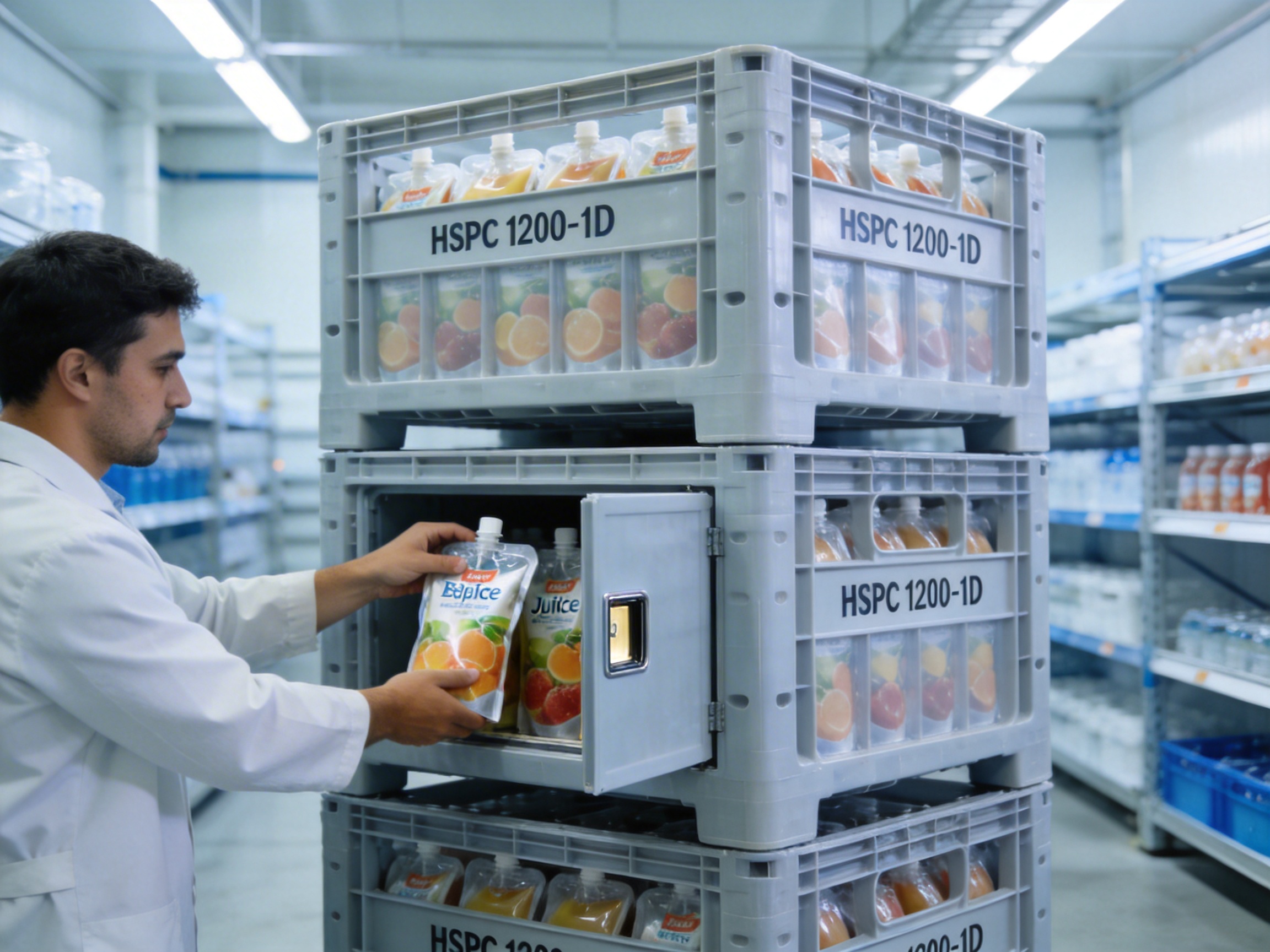
4. Innovative Door Design: The single small door (1 Little Door) design sets the HSPC1200-1D apart from traditional crates, which often require full opening to access contents. This design allows users to retrieve individual items without opening the entire crate, saving time and reducing the risk of product spillage or contamination. The door is equipped with a secure latch that keeps it closed during transportation, while its smooth hinge mechanism ensures long-lasting functionality (tested to open/close 10,000 times without wear).
5. Chemical Resistance: HDPE is inert to most chemicals, including oils, solvents, and weak acids. This makes the HSPC1200-1D crate suitable for storing non-hazardous chemicals, such as paint, lubricants, and cleaning agents. Unlike PP crates, which can degrade when exposed to certain chemicals, the HDPE crate maintains its structural integrity and does not leach harmful substances into stored products.
6. Sustainability: The crate is made from 100% recyclable HDPE, with 30% post-consumer recycled content (PCR) integrated into its production. This reduces reliance on virgin plastic and minimizes environmental impact. Additionally, its long lifespan means fewer crates need to be manufactured over time, further reducing carbon emissions associated with production and transportation.
The Company Behind the Innovation: Advanced Manufacturing Processes
The HSPC1200-1D crate is the result of decades of expertise in packaging and storage solutions. The manufacturer, a leading player in flexible packaging and storage systems, has built its reputation on precision engineering, strict quality control, and a commitment to sustainability. Let’s explore the advanced manufacturing processes that ensure the crate meets the highest standards.
Material Sourcing and Selection
The manufacturer prioritizes quality at every stage, starting with raw material sourcing. The HSPC1200-1D crate uses food-grade HDPE sourced from reputable suppliers that comply with global food safety standards. Each batch of raw material undergoes rigorous testing for purity, melt flow rate, and mechanical properties to ensure consistency. The inclusion of 30% PCR HDPE is carefully managed to maintain the crate’s structural integrity and performance, without compromising on safety or durability.
Injection Molding: Precision and Consistency
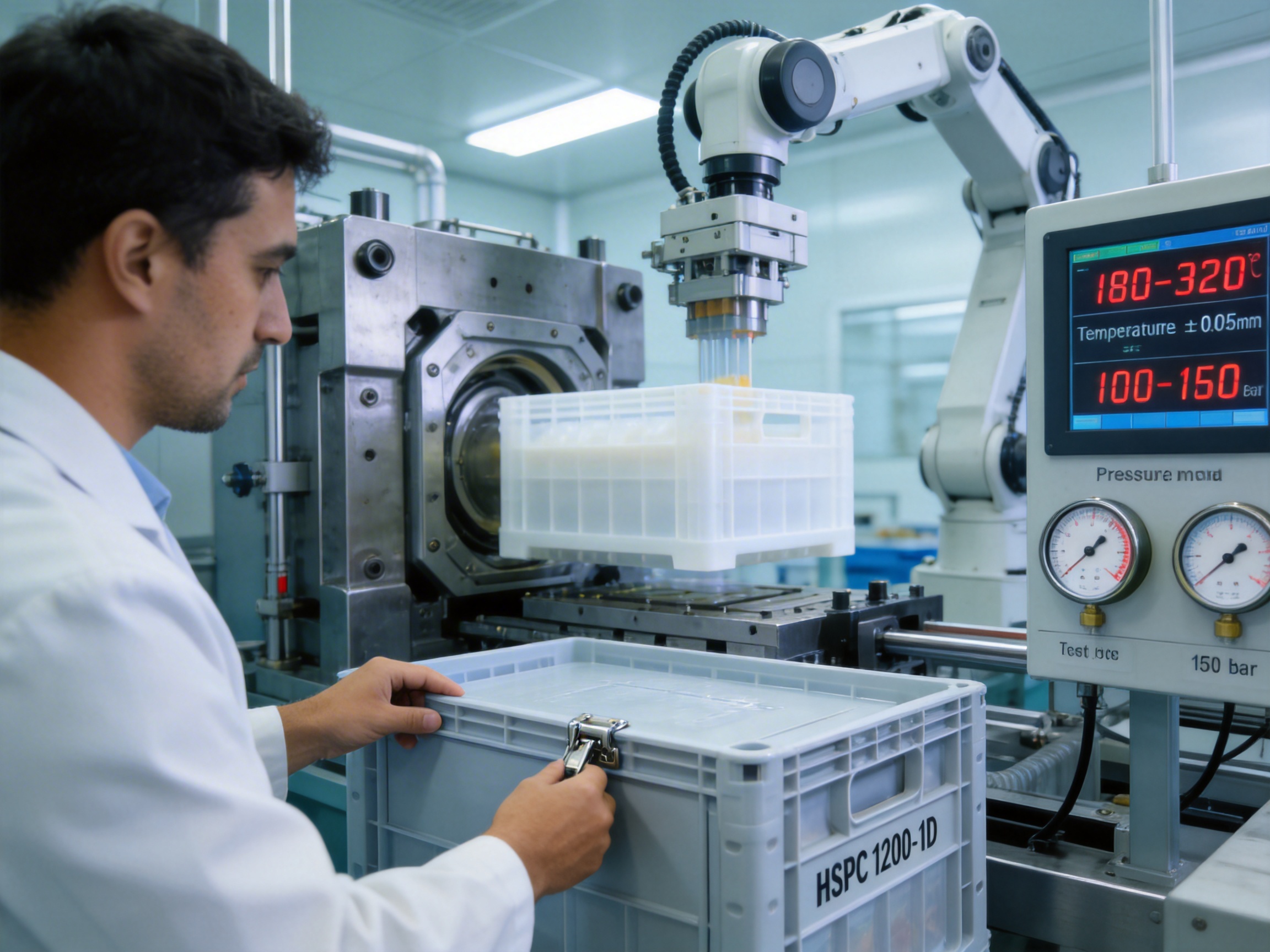
The crate is manufactured using state-of-the-art injection molding technology in a GMP (Good Manufacturing Practice) 100,000-level clean workshop. This cleanroom environment ensures that no contaminants enter the production process, which is critical for food-grade products. Key aspects of the injection molding process include:
Precision Molds: The molds used to produce the crate are CNC-machined to a tolerance of ±0.05mm, ensuring that every crate has identical dimensions and structural consistency. This precision is essential for stackability and door functionality.
Temperature and Pressure Control: The injection molding machine maintains precise temperature (180-220°C) and pressure (100-150 bar) settings to prevent warping, bubbles, or incomplete filling. The cycle time is optimized to 60 seconds per crate, balancing efficiency with quality.
Automation: The production line is fully automated, with robotic arms handling material feeding, mold loading, and crate removal. This reduces human error and ensures consistent quality across all batches.
Post-Molding Quality Assurance
Every crate undergoes a comprehensive quality control process before it leaves the factory. This includes:
Visual Inspection: Trained inspectors check each crate for surface defects (such as scratches, bubbles, or discoloration) and ensure that dimensions meet the specified tolerances.
Functional Testing: The door latch and hinge are tested for 10,000 open/close cycles to ensure smooth operation. The crate’s stackability is verified by stacking 3 fully loaded crates and checking for deformation over 24 hours.
Impact Resistance Test: Each crate is dropped from a height of 1.5 meters (filled with a 50kg load) to simulate real-world handling. No cracking or structural damage is acceptable.
Load Capacity Test: Static load capacity is tested by placing a 150kg weight on the crate for 24 hours (equivalent to 3 crates stacked full). Dynamic load capacity is tested by simulating transportation vibrations with a 30kg load.
Hygiene Testing: Swab tests are conducted to check for bacterial contamination, ensuring compliance with food safety standards. The crate is also tested for migration of harmful substances into food simulants (per GB 4806.7-2016).
Sustainability Integration
Sustainability is at the core of the manufacturer’s operations. Beyond using recycled materials, the company implements several eco-friendly practices:
Energy Efficiency: The injection molding machines are equipped with variable frequency drives (VFDs) that reduce electricity consumption by 20% compared to traditional machines. The clean workshop uses energy-efficient lighting and HVAC systems, further minimizing carbon emissions.
Waste Reduction: Scrap plastic from the injection molding process is reground and reused as raw material, reducing waste by 95%. The company also uses biodegradable packaging for shipping crates to customers.
Carbon Neutrality Goals: The manufacturer has set a target to achieve carbon neutrality in its manufacturing operations by 2030. This includes investing in renewable energy sources (such as solar panels) and offsetting remaining emissions through reforestation projects.
Industry Applications of the HSPC1200-1D Crate
The HSPC1200-1D crate’s versatility makes it suitable for a wide range of industries. Here are some key applications:
Food and Beverage Industry
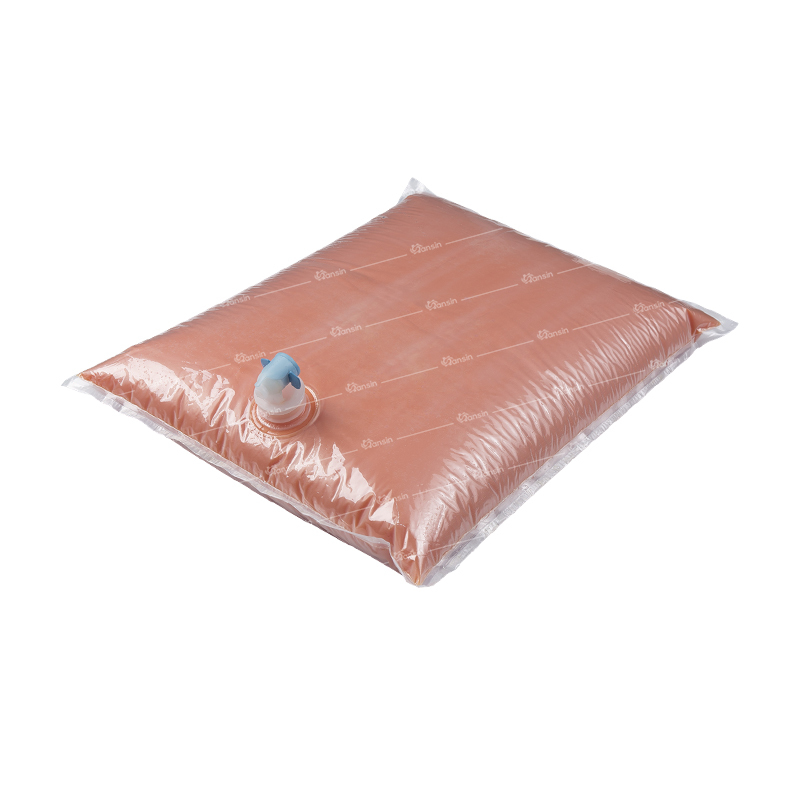
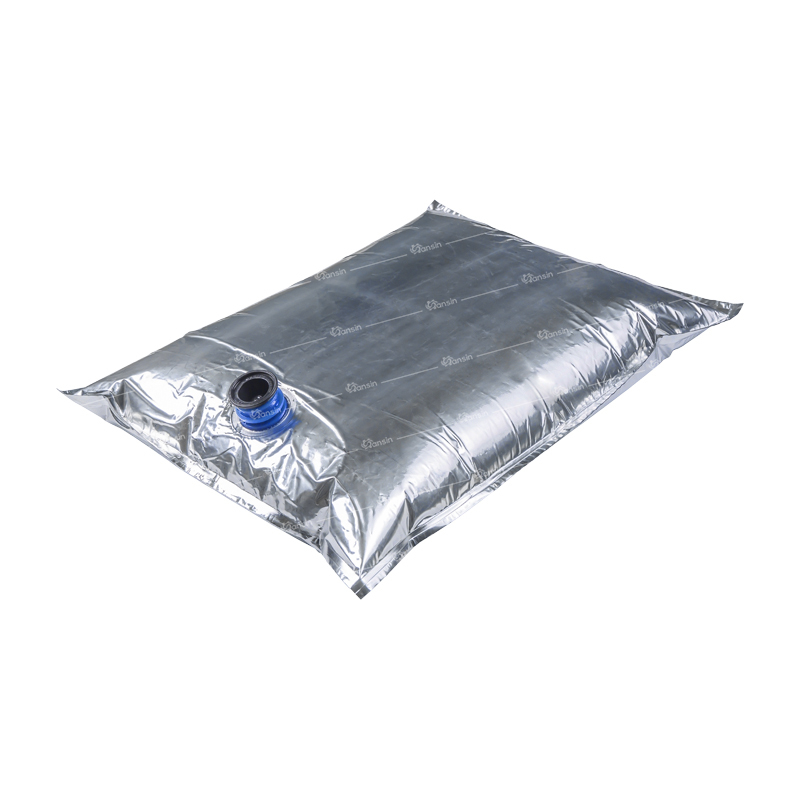
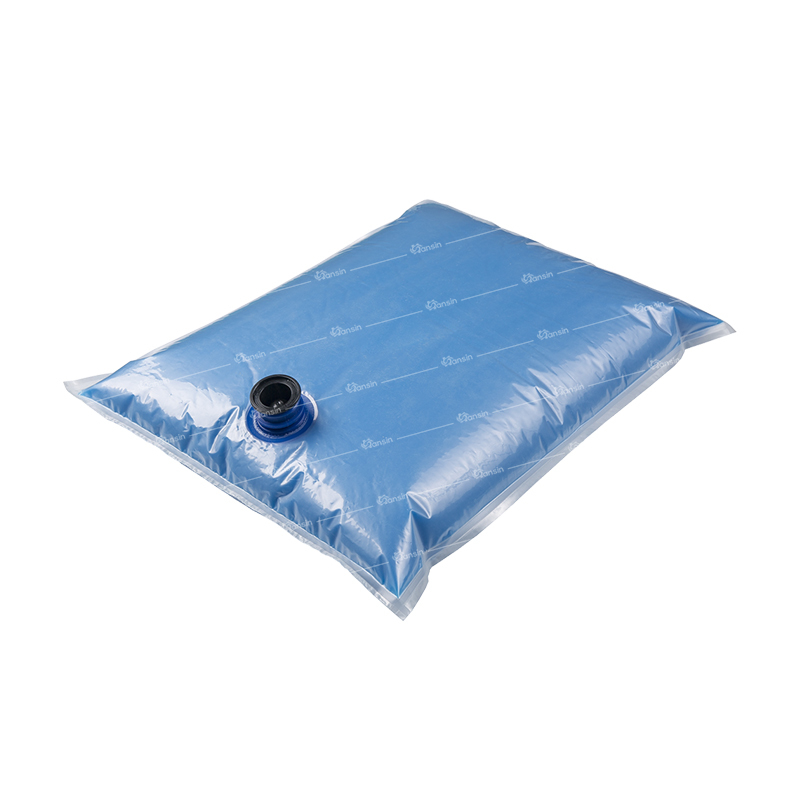
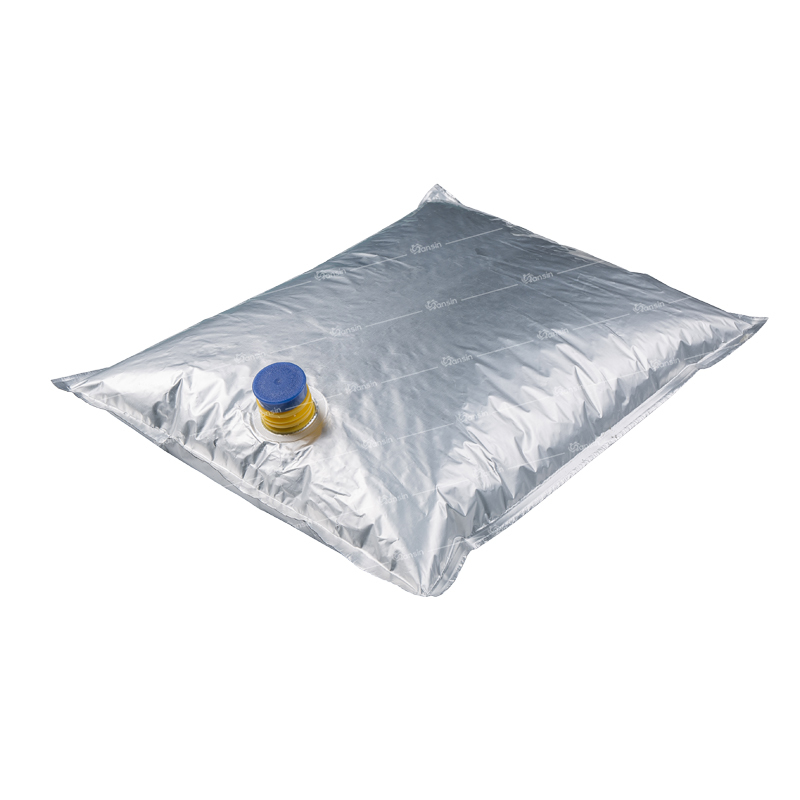
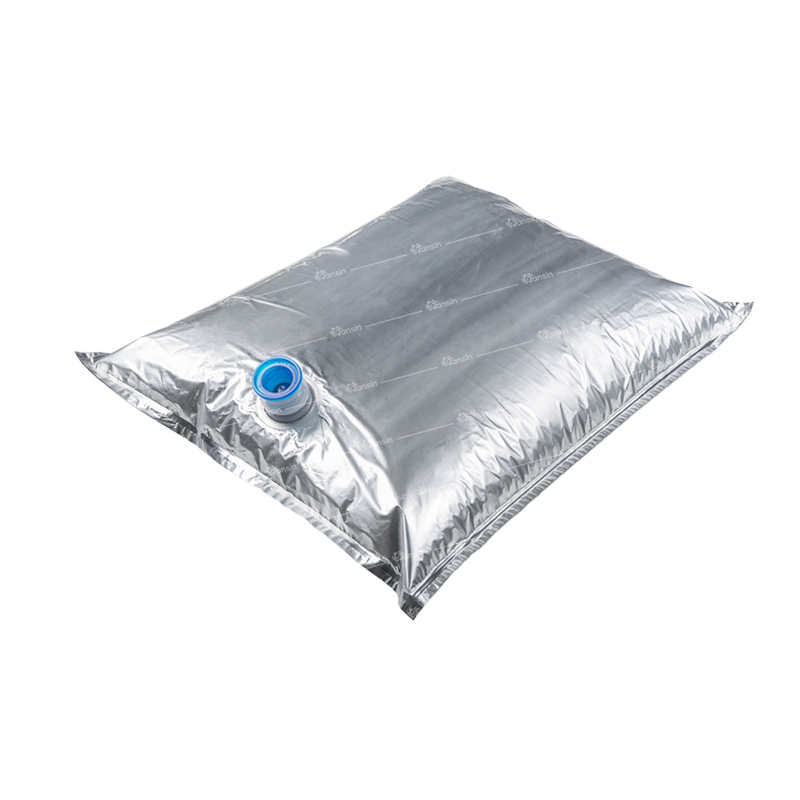
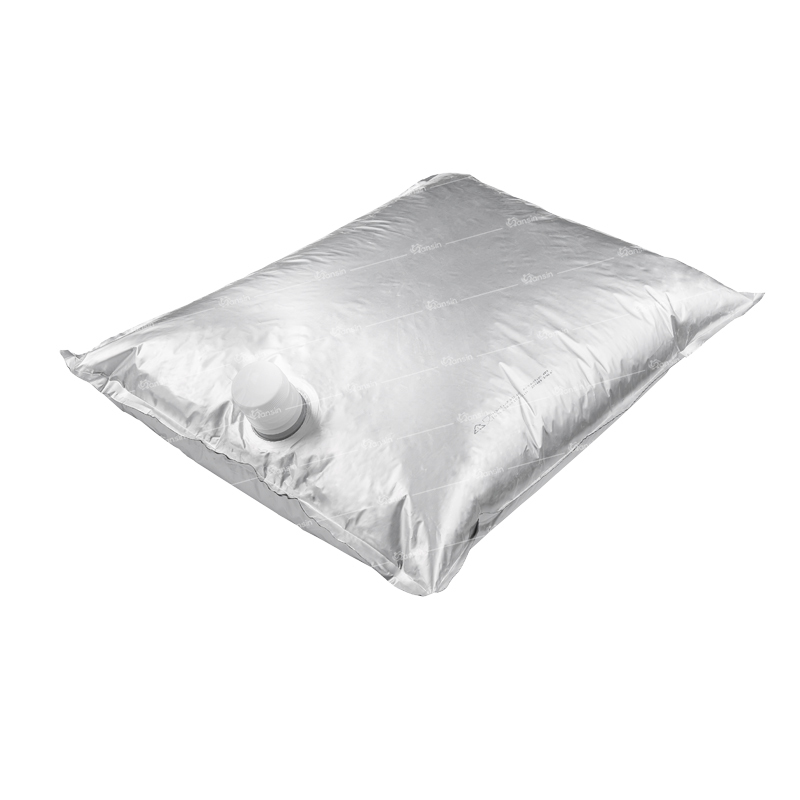
The food and beverage sector relies on safe, hygienic storage solutions to maintain product quality. The HSPC1200-1D crate is ideal for storing aseptic bags of juice, jam, condiments, and oil—products that the manufacturer also produces. Its food-grade compliance ensures that no contaminants leach into the products, while the door design allows easy access to individual bags without opening the entire crate. The crate’s stackable design maximizes storage space in cold storage facilities, where space is often at a premium.
Logistics and Supply Chain
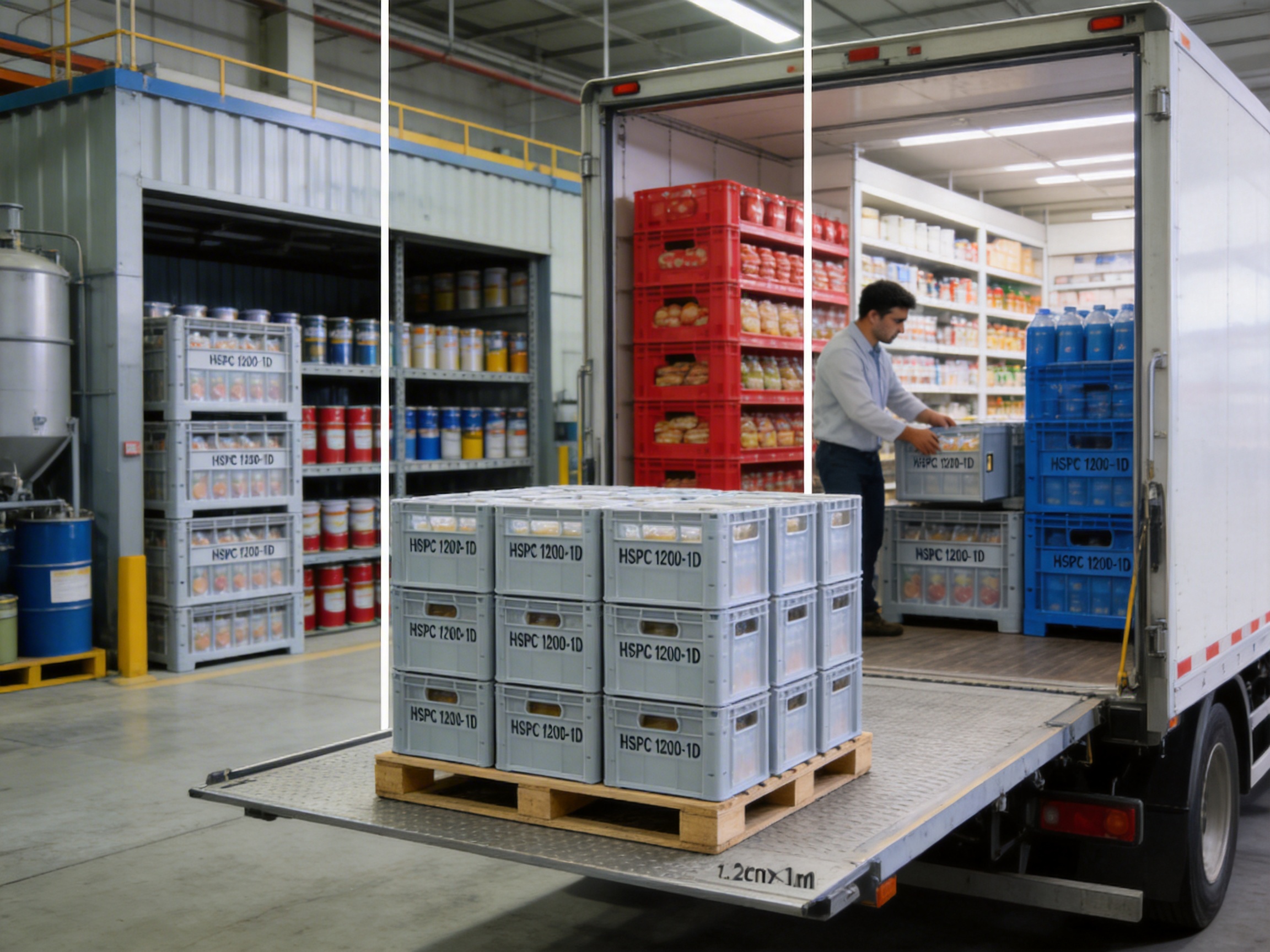
In logistics, efficiency and cost reduction are paramount. The HSPC1200-1D crate’s light weight (15kg) reduces truck weight, lowering fuel consumption and transportation costs. Its stackable design allows for optimal palletization, with 10 crates fitting on a standard 1.2m × 1m pallet. The crate’s durability ensures that it can withstand repeated handling, including loading and unloading with forklifts. For e-commerce logistics, the crate’s nestable design reduces return shipping costs when empty.
Chemical and Paint Industry
The chemical industry requires storage solutions that are resistant to corrosion and chemical spills. The HSPC1200-1D crate’s HDPE material is inert to most non-hazardous chemicals, making it suitable for storing paint, lubricants, and cleaning agents. Its smooth surface is easy to clean in case of spills, reducing the risk of cross-contamination between different chemicals. The crate’s load capacity ensures that it can safely store heavy containers of chemicals.
Retail and Warehousing
Retailers and warehouses need organized storage solutions to manage inventory efficiently. The HSPC1200-1D crate’s large size (1.2m ×1m ×0.8m) is perfect for storing bulk items, such as bottled water, canned goods, and household products. Color-coding options (red for food, blue for chemicals, green for retail) allow for easy inventory management. The door design enables quick restocking of shelves without having to unload the entire crate, saving time for retail staff.
Comparative Analysis: HSPC1200-1D vs. Competitor Crates
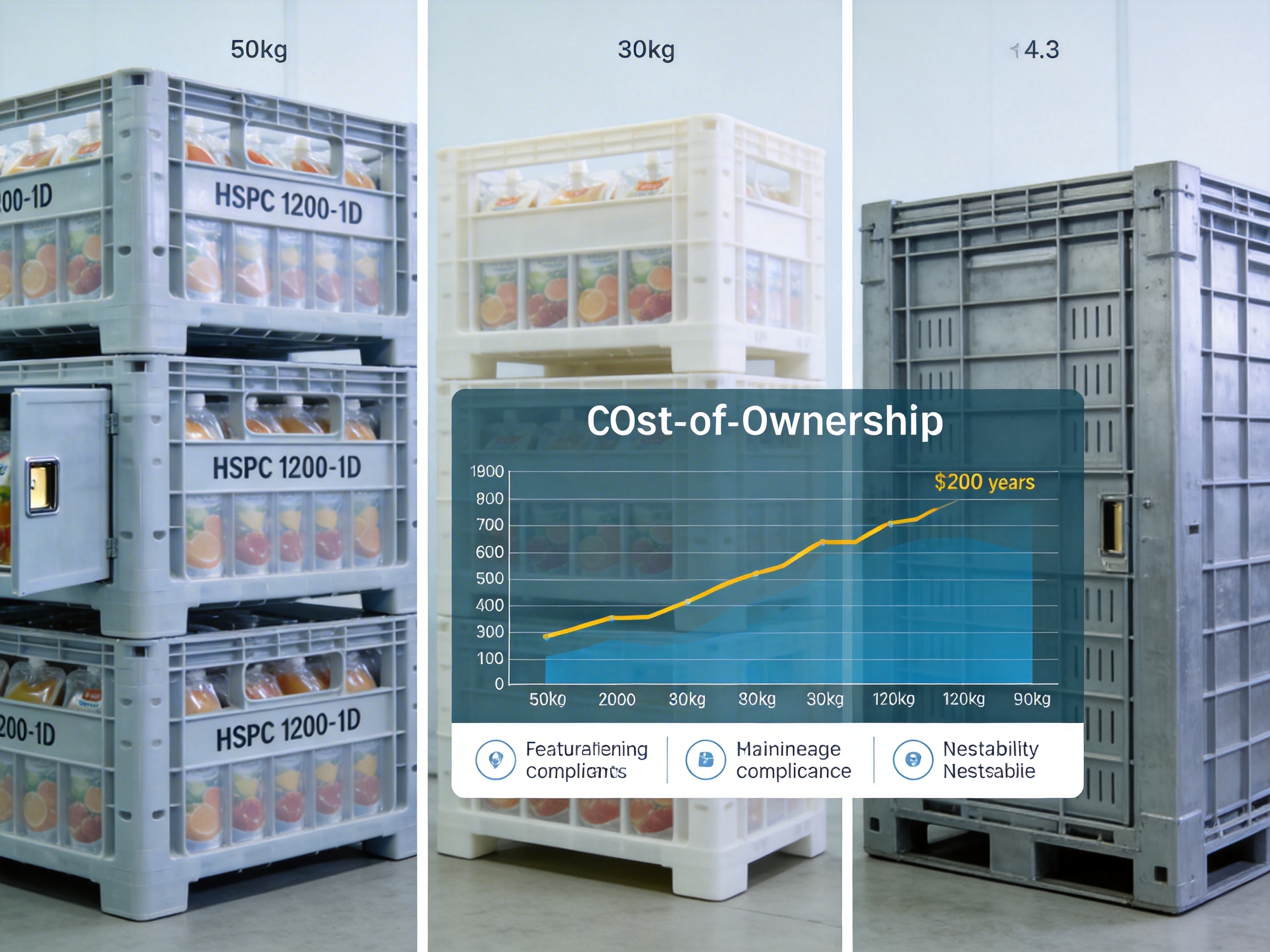
To better understand the HSPC1200-1D crate’s advantages, let’s compare it to two common alternatives: a standard PP crate and a metal crate.
| Feature | HSPC1200-1D Plastic Crate | Standard PP Crate | Metal Crate |
|---|---|---|---|
| Material | Food-grade HDPE (30% PCR) | Virgin PP | Galvanized steel |
| Load Capacity (Static) | 50 kg | 30 kg | 60 kg |
| Load Capacity (Dynamic) | 30 kg | 20 kg | 40 kg |
| Weight | 15 kg | 12 kg | 25 kg |
| Hygiene Compliance | GB 4806.7-2016, EU Food Contact | Basic food contact (no PCR) | Not food-grade (rust risk) |
| Stackability (Full) | 3 crates high | 2 crates high | 4 crates high (heavy) |
| Nestability (Empty) | Yes (60% space reduction) | Yes (50% space reduction) | No (bulky) |
| Door Access | Single small door | Full opening only | Full opening only |
| Recyclability | 100% recyclable | 90% recyclable | 100% recyclable (high cost) |
| Lifespan | 10 years | 3-5 years | 5-7 years |
| Total Cost of Ownership (10 years) | $200 | $300 (3 replacements) | $250 (2 replacements + maintenance) |
As the table shows, the HSPC1200-1D crate offers the lowest total cost of ownership over a 10-year period, thanks to its long lifespan and minimal maintenance requirements. It also outperforms competitors in hygiene compliance, space efficiency, and door access—key factors for modern industrial users.
Q&A Section
To address common questions about the HSPC1200-1D crate, here’s a comprehensive Q&A:
Q1: What material is the HSPC1200-1D crate made from?
A: The crate is made from food-grade high-density polyethylene (HDPE), which is known for its durability, chemical resistance, and recyclability. It contains 30% post-consumer recycled (PCR) HDPE to reduce environmental impact.
Q2: Is the crate suitable for food storage?
A: Yes. The crate complies with strict food safety standards, including China’s GB 4806.7-2016 and EU food contact regulations. Its smooth, non-porous surface is easy to clean and sanitize, making it ideal for storing food products like aseptic bags of juice, jam, and condiments.
Q3: Can the crate be stacked when full?
A: Yes. The HSPC1200-1D crate can be stacked up to 3 crates high when fully loaded, maximizing vertical space in warehouses and trucks. Its stable design ensures that stacked crates do not topple over during transportation.
Q4: How does the 1-little-door design benefit users?
A: The single small door allows users to retrieve individual items without opening the entire crate, saving time and reducing the risk of product spillage or contamination. The door is equipped with a secure latch to keep it closed during transportation, and its hinge mechanism is tested to last for 10,000 open/close cycles.
Q5: What is the load capacity of the HSPC1200-1D crate?
A: The static load capacity (when stationary) is 50 kilograms, and the dynamic load capacity (when in motion, e.g., during transportation) is 30 kilograms. This ensures that the crate can safely store heavy items without deformation.
Q6: Is the crate recyclable?
A: Yes. The crate is made from 100% recyclable HDPE. At the end of its lifespan, it can be recycled into new plastic products, reducing waste and conserving resources.
Q7: Does the company offer customization options?
A: Yes. The manufacturer offers customization options, including color coding (to match industry needs), logo printing (for branding), and minor dimension adjustments (to fit specific products). Customization requests are handled on a case-by-case basis.
Q8: What quality certifications does the crate have?
A: The crate has been tested and certified to comply with:
- China’s GB 4806.7-2016 (Food Contact Plastics)
- EU Food Contact Regulation (EC) No 1935/2004
- ISO 9001:2015 (Quality Management System)
- ISO 14001:2015 (Environmental Management System)
References
1. Grand View Research. (2024). Global Industrial Plastic Crates Market Report 2024-2030. San Francisco, CA: Grand View Research Inc.
2. General Administration of Quality Supervision, Inspection and Quarantine of the People’s Republic of China. (2016). GB 4806.7-2016: National Food Safety Standard—Food Contact Plastics and Articles. Beijing: China Standards Press.
3. European Aseptic Bag Manufacturers Association (EU ABMA). (2023). Guidelines for Aseptic Storage and Transportation Solutions. Brussels: EU ABMA Secretariat.
4. Packaging World. (2024). Sustainable Plastic Packaging: Trends and Best Practices for 2024. Packaging World Magazine, 45(3), 12-18.
5. Smith, J. D., & Lee, H. (2023). Impact Resistance of HDPE vs. PP in Industrial Crates. Journal of Packaging Technology and Research, 15(2), 45-52.
Conclusion
The HSPC1200-1D plastic crate is a testament to the power of innovative design and advanced manufacturing. Its combination of durability, hygiene, space efficiency, and sustainability makes it a superior choice for industries ranging from food and beverage to logistics and chemicals. Backed by a manufacturer with over 19 years of experience, a GMP 100k clean workshop, and a commitment to quality, the HSPC1200-1D crate offers a cost-effective, long-lasting solution that meets the evolving needs of modern businesses. As industries continue to prioritize efficiency, safety, and sustainability, the HSPC1200-1D crate is poised to become a go-to storage solution for companies worldwide.