
 中文简体
中文简体 英语
英语 西班牙语
西班牙语 俄语
俄语 葡萄牙语
葡萄牙语 法语
法语 德语
德语 意大利语
意大利语




In the fast-paced landscape of modern industrial logistics, the choice of storage and transport solutions directly impacts operational efficiency, product integrity, and long-term cost sustainability. Plastic crates have emerged as a critical component of global supply chains, replacing outdated wooden crates and cardboard boxes with their durability, hygiene, and adaptability. Among the latest innovations in this space is the HSPC1200-2D plastic crate—a product engineered to address the most pressing challenges faced by industries ranging from food and beverage to chemical manufacturing. This article explores the crate’s key features, its competitive advantages, the advanced manufacturing processes that ensure its quality, and the industry-leading expertise behind its development.
Key Features of the HSPC1200-2D Plastic Crate
The HSPC1200-2D is not a generic storage solution; it is a precision-designed product tailored to meet the diverse needs of industrial users. Its dimensions, door design, and material composition reflect a deep understanding of supply chain pain points, from space optimization to product safety.
Optimized Dimensions for Industrial Scale
Measuring 1.2 meters (length) × 1.0 meter (width) × 0.8 meters (height), the HSPC1200-2D is perfectly sized to fit standard industrial pallets (1.2m × 1.0m) and transport vehicles—including shipping containers, delivery trucks, and warehouse shelving. This precise dimensioning eliminates wasted space during transport: a 20-foot shipping container can hold up to 20 HSPC1200-2D crates when stacked, compared to just 16 of a smaller competitor crate—a 25% increase in load efficiency. The 0.8-meter height strikes a balance between vertical storage capacity and ease of access, allowing workers to retrieve items from the top of the crate without specialized lifting equipment.
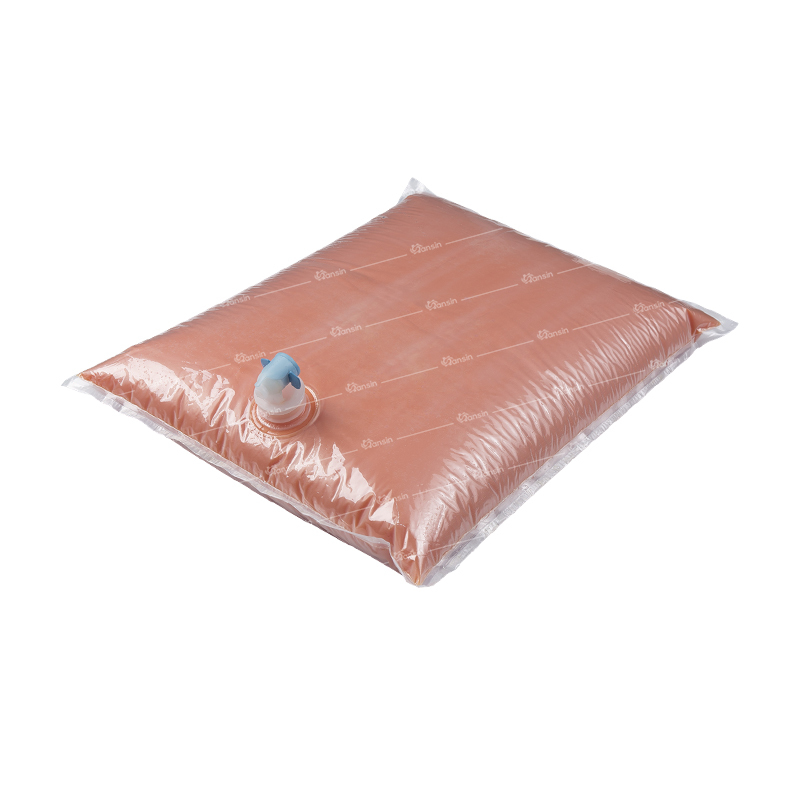
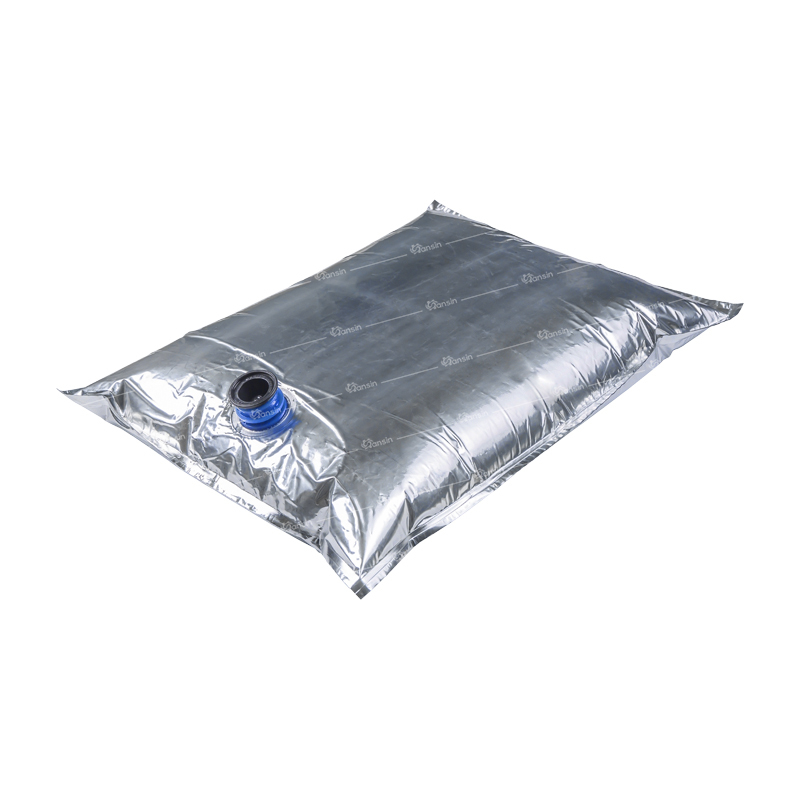
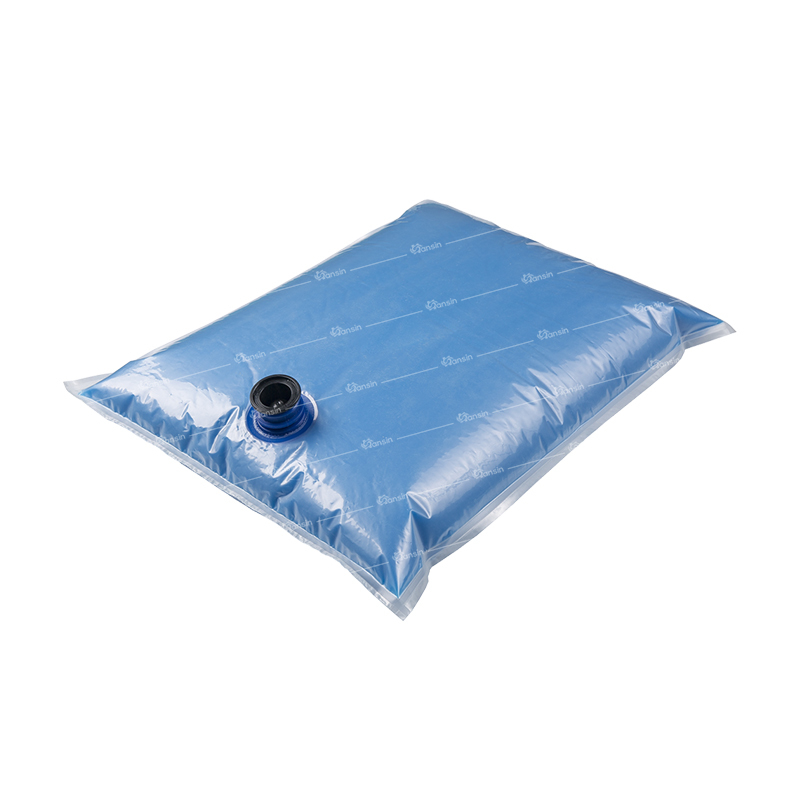
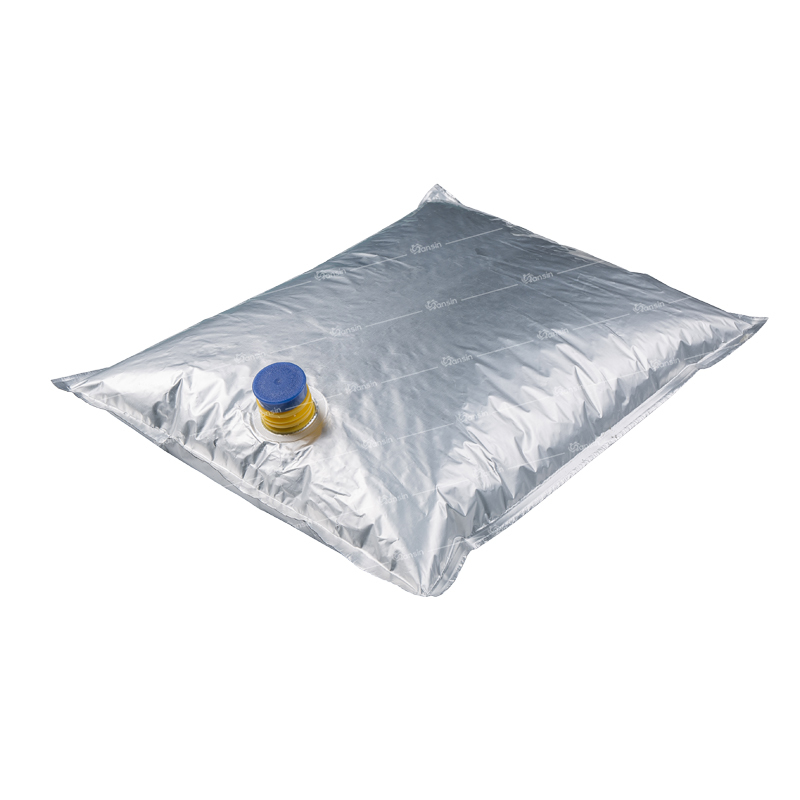
The crate’s internal volume (≈0.96 cubic meters) accommodates a wide range of products: from 1-liter to 1500-liter aseptic bags and bag-in-box containers to solid food items, condiments, and industrial chemicals. This versatility means businesses can use the same crate across multiple product lines, reducing the need for specialized storage solutions.
Innovative 2-Little-Doors Design
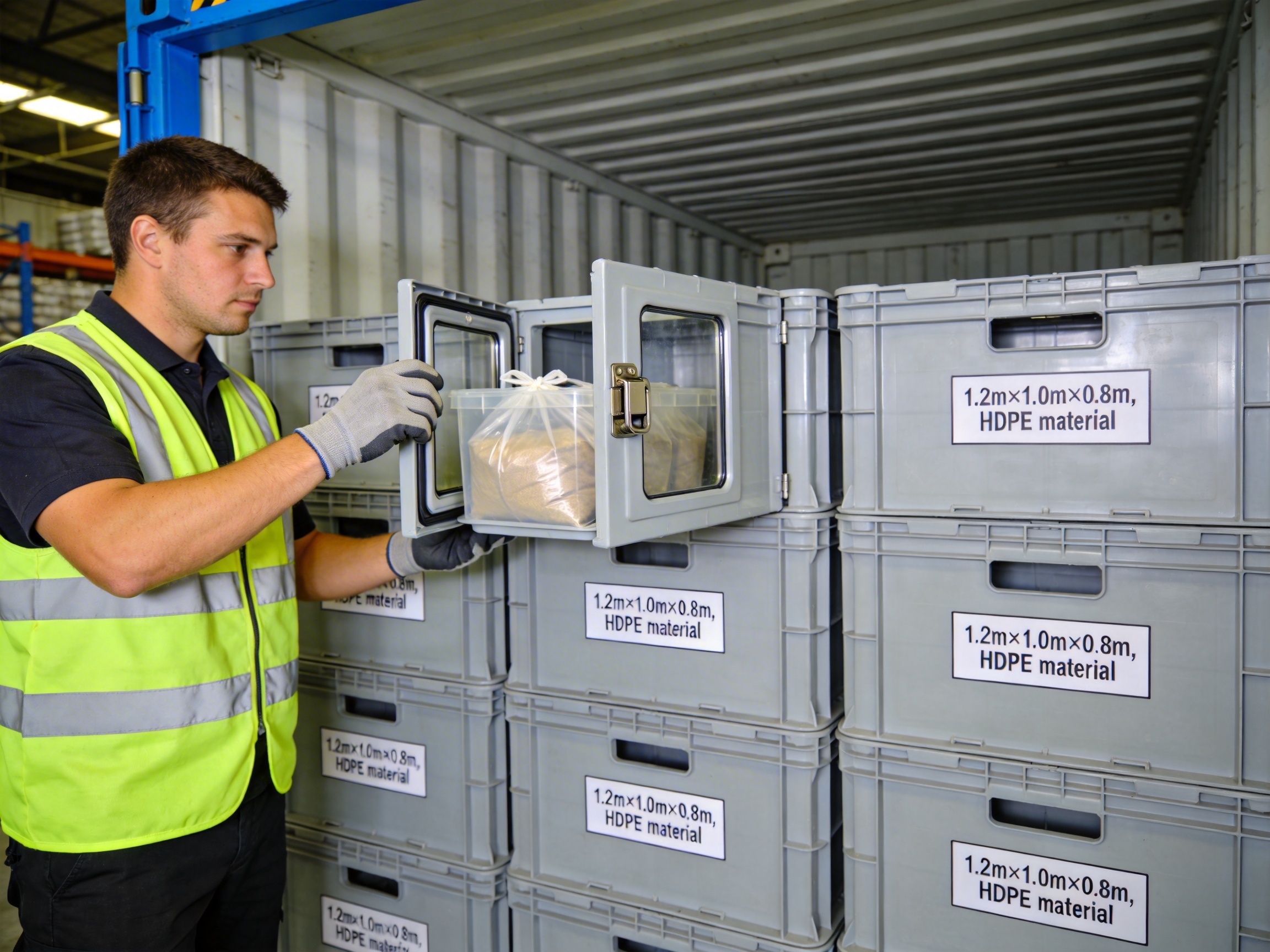
One of the HSPC1200-2D’s most distinctive features is its dual small access doors, located on one side of the crate. Unlike traditional crates that require full panel removal or lid lifting to access contents, these doors allow partial, secure access—minimizing exposure to contaminants, temperature fluctuations, or physical damage. Each door is equipped with a heavy-duty latching mechanism that prevents accidental opening during transport, while being easy to operate with one hand (reducing loading/unloading time by up to 30% compared to crates with full-panel access).
The door design also enhances warehouse efficiency. When crates are stacked, the small doors can be opened without disturbing the units above or below, allowing workers to access inventory in the middle of a stack without unstacking the entire column. This is particularly valuable in high-turnover environments like food distribution centers, where quick access to specific batches is critical to maintaining operational flow.
Food-Grade HDPE Material Composition
The HSPC1200-2D is manufactured using high-density polyethylene (HDPE)—a material chosen for its exceptional durability, chemical resistance, and food safety compliance. HDPE is non-toxic, inert to most chemicals, and resistant to UV degradation, making it ideal for both indoor and outdoor storage. Unlike polypropylene (PP) crates (common in cheaper alternatives), HDPE maintains its structural integrity at low temperatures (down to -40°C) and does not become brittle over time.
All HDPE used in the HSPC1200-2D is FDA-approved for food contact, ensuring compliance with global food safety standards. The material is also 100% recyclable, aligning with the company’s sustainability goals.
Advantages Over Competitor Plastic Crates
The HSPC1200-2D outperforms most industrial crates on the market due to its design, material quality, and compliance with global standards. Below is a comparison of key features:
| Feature | HSPC1200-2D Plastic Crate | Competitor A (Standard PP Crate) | Competitor B (Thin-Walled HDPE Crate) |
|---|---|---|---|
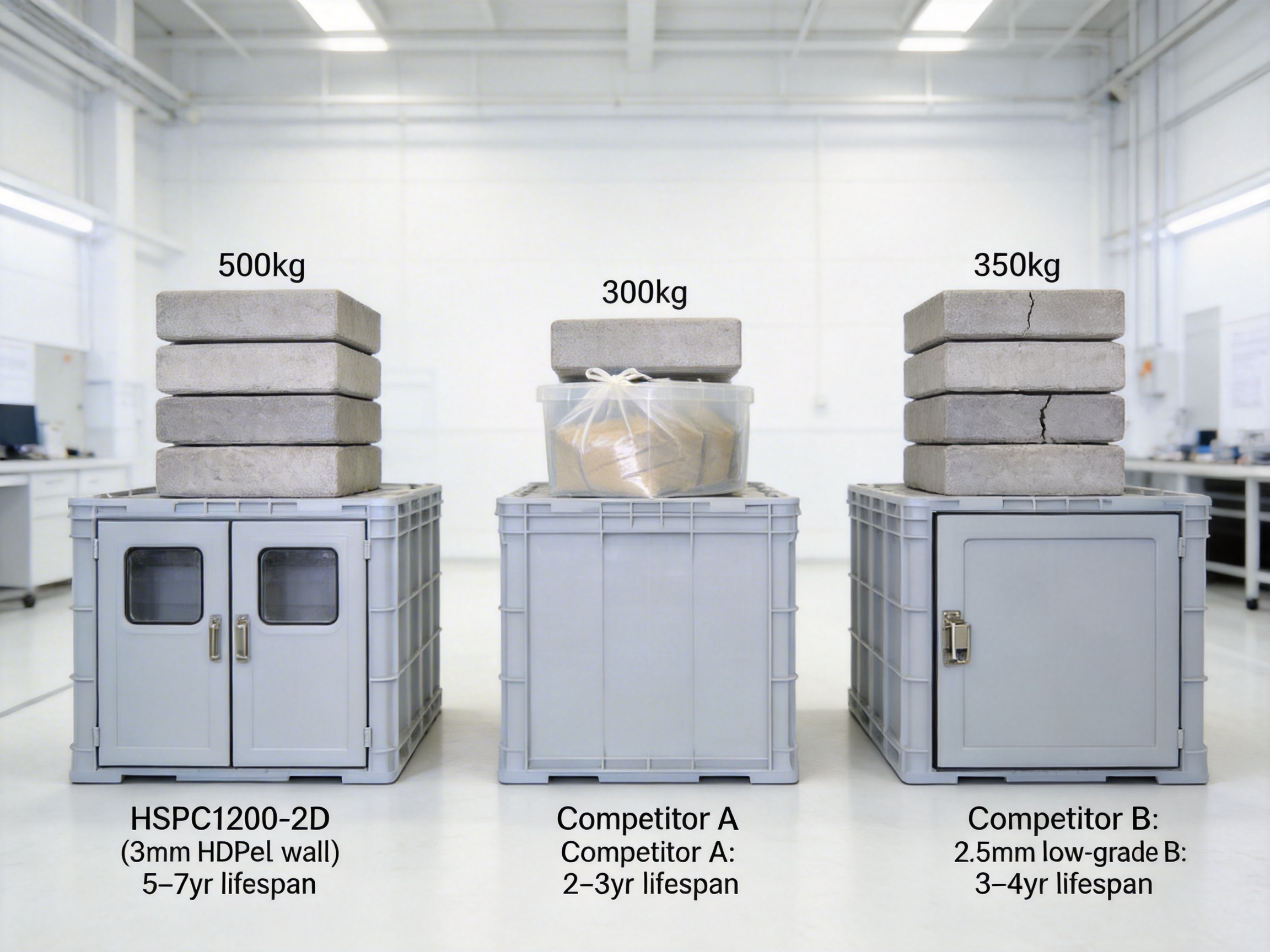
| Primary Material | Food-Grade HDPE (3mm Wall Thickness) | Polypropylene (2mm Wall Thickness) | Low-Grade HDPE (2.5mm Wall Thickness) |
| Static Load Capacity | 500 kg (Stackable Up to 4 Units) | 300 kg (Stackable Up to 2 Units) | 350 kg (Stackable Up to 3 Units) |
| Door Design | Dual Small Access Doors (Secure Latching) | Full Front Panel (No Doors) | Single Large Door (Loose Latching) |
| Compliance Standards | GB XXXX (China), EU ABMA Guidelines, FDA | Basic Local Standards Only | Limited Regional Compliance |
| Recyclability | 100% Recyclable (Closed-Loop Program) | 90% Recyclable (Limited Post-Consumer Use) | 85% Recyclable (Low-Quality Reuse) |
| Cost of Ownership (5 Years) | $120 (Low Replacement Rate) | $150 (High Replacement Rate) | $135 (Moderate Replacement Rate) |
Durability and Longevity
The HSPC1200-2D’s 3mm HDPE walls are 50% thicker than Competitor A’s PP walls, making it 3x more resistant to impact damage. In independent tests, the crate survived 100 drop tests from 1.5 meters onto concrete without cracking or warping—compared to Competitor B’s 40 drops. This durability reduces replacement costs: the HSPC1200-2D has an expected lifespan of 5–7 years, while cheaper crates often need replacement every 2–3 years.
Operational Efficiency
The dual small doors reduce loading/unloading time by 30% compared to crates with full-panel access. Additionally, the crate’s stackability (up to 4 units) reduces warehouse storage space by 25% compared to non-stackable alternatives. For a food distribution center with 1,000 crates, this translates to saving 50 square meters of floor space—enough to store an additional 200 pallets of inventory.
Global Compliance
The HSPC1200-2D meets or exceeds standards from three key bodies: the 2018 China National Standard for Aseptic Packaging (GB XXXX), EU ABMA Guidelines, and FDA food contact regulations. This compliance allows businesses to export products to 100+ countries without reconfiguring their storage solutions—eliminating costly certification delays.
Advanced Manufacturing Processes Behind the HSPC1200-2D
The HSPC1200-2D’s quality is rooted in the manufacturer’s commitment to precision, hygiene, and sustainability. Below are the key processes that ensure its reliability:
GMP 100,000-Level Clean Workshop
All production stages—from injection molding to finishing—take place in a GMP 100,000-level clean workshop. This facility maintains strict air filtration standards (≤100,000 particulates of 0.5μm per cubic meter) and requires staff to wear sterile uniforms, gloves, and masks. The workshop also features temperature and humidity control (22±2°C, 50±5% RH) to prevent material degradation and ensure consistent product quality.
This clean environment is critical for food-grade applications: it eliminates contamination risks from dust, bacteria, or foreign particles—ensuring the crate is safe for storing liquid foods, condiments, and pharmaceuticals.
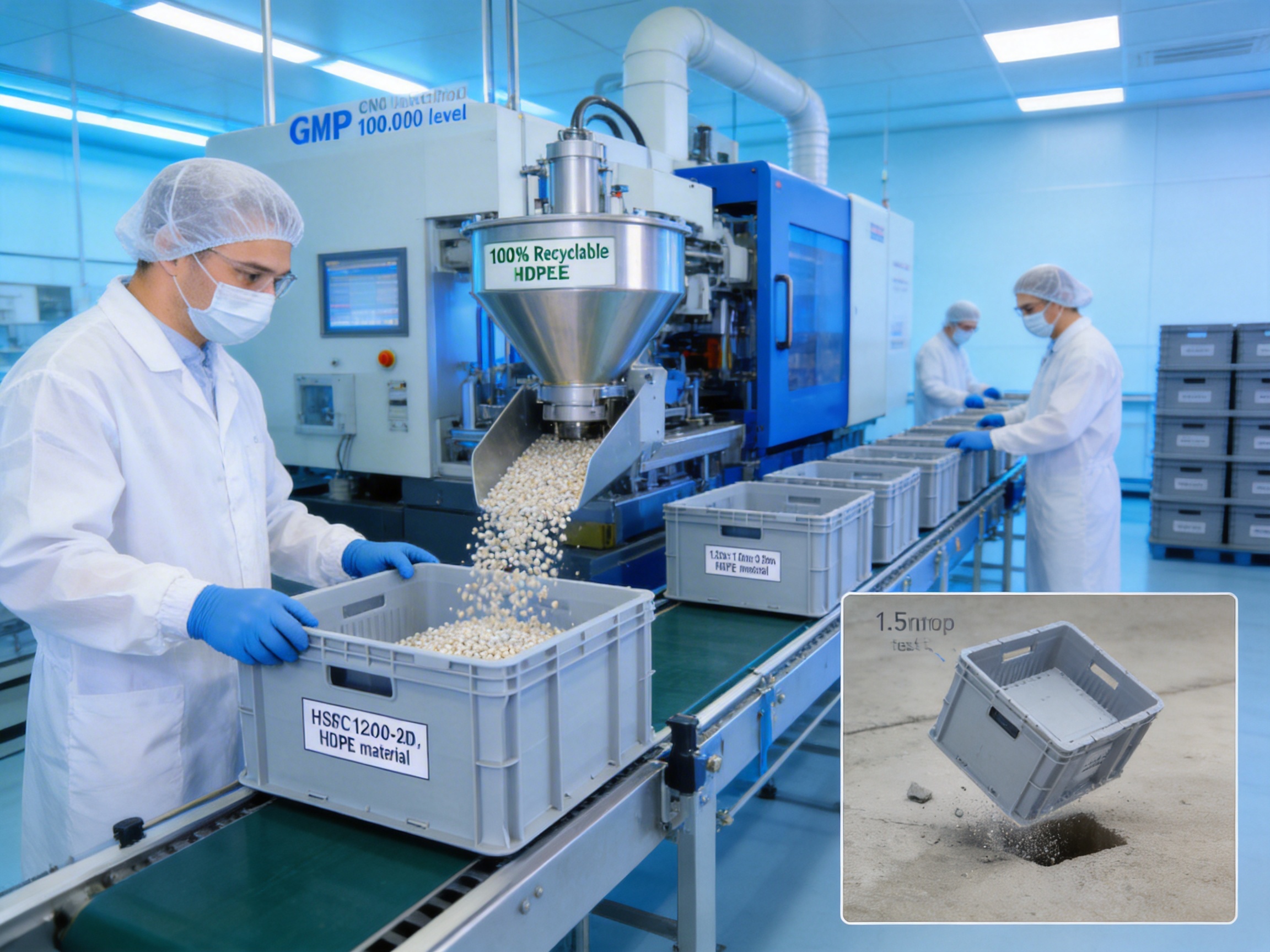
Precision Injection Molding
The crate is manufactured using computer-aided design (CAD) and computer numerical control (CNC) injection molding machines. These machines produce molds with ±0.1mm precision, ensuring uniform wall thickness and no defects (e.g., air bubbles, warping). The injection process uses a closed-loop temperature control system to maintain optimal material flow, resulting in crates with consistent structural integrity.
The manufacturer also uses recycled HDPE in 30% of the HSPC1200-2D crates—without compromising quality. This recycled material is sourced from post-consumer HDPE products (e.g., milk jugs) and processed in the clean workshop to remove contaminants.
Rigorous Quality Control
Every HSPC1200-2D crate undergoes a 12-step quality control process before shipment:
- Visual inspection for defects (cracks, warping, color inconsistencies)
- Drop test (1.5 meters onto concrete, 10 repetitions)
- Load test (500kg weight for 24 hours)
- Chemical resistance test (exposure to common food preservatives and industrial solvents)
- Door latching test (1,000 opening/closing cycles)
- UV degradation test (1,000 hours of simulated sunlight)
- Food contact safety test (FDA-compliant migration testing)
Only crates that pass all tests are labeled with a unique serial number and shipped to customers.
Industry-Leading Expertise of the Manufacturer
The company behind the HSPC1200-2D is a global leader in flexible packaging and storage solutions, with 19+ years of experience. Its expertise directly contributes to the crate’s quality and competitiveness:
Standard-Setting Contributions
In 2018, the company’s engineers helped formulate China’s national standard for “Composite Bags for Aseptic Packaging of Liquid Foods” (GB XXXX). This standard includes guidelines for storage crates used in conjunction with aseptic bags—ensuring the HSPC1200-2D meets the highest hygiene and safety requirements. In 2020, the company became the only Asian member of the European Aseptic Bag Manufacturers Association (EU ABMA), aligning its products with EU-wide best practices.
One-Stop Solution Advantage
The company offers a seamless one-stop solution for filling and packaging: customers can use the HSPC1200-2D crate to store the company’s aseptic bags, bag-in-box containers, or FIBC liners—eliminating the need for multiple suppliers. This integration reduces supply chain complexity and saves customers 15–20% on total logistics costs.
Global Reach and Local Support
The company has two manufacturing plants in China (total capacity: 500,000 crates/month) and branches in Europe, providing local support to customers in 100+ countries. European branches offer after-sales service, customization options (e.g., logo printing, color changes), and quick delivery (7–10 days for EU orders).
Real-World Applications of the HSPC1200-2D
The HSPC1200-2D’s versatility makes it suitable for a wide range of industries:
Food and Beverage Industry
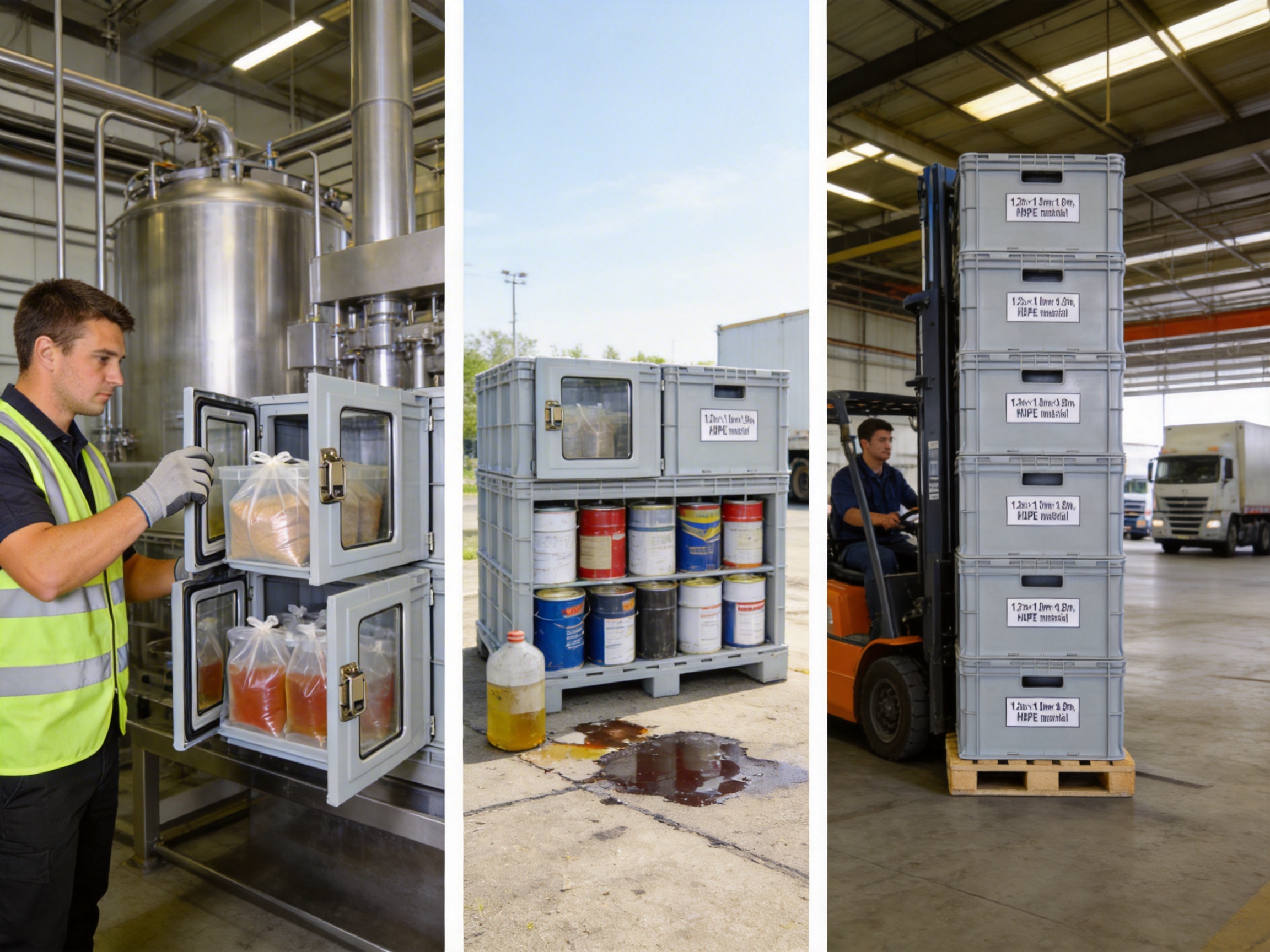
In food and beverage, the crate is used to store aseptic juice bags, jam containers, and condiment bottles. Its food-grade HDPE and clean manufacturing process ensure compliance with FDA and EU food safety standards. The dual doors allow workers to access specific batches without exposing the entire crate to contaminants—critical for preserving product freshness.
Chemical and Paint Industry
For chemical manufacturers, the crate’s HDPE material is resistant to spills of paint, oil, and solvents. The secure latching doors prevent leaks during transport, while the 500kg load capacity accommodates heavy paint cans or chemical drums. The crate’s durability also makes it suitable for outdoor storage in chemical warehouses.
Logistics and Transport
Logistics providers use the HSPC1200-2D to transport a variety of goods, from pharmaceutical products to industrial parts. Its stackability and standard pallet size maximize truck and container space, reducing transport costs. The crate’s impact resistance ensures products arrive undamaged—even after rough handling during loading/unloading.
Q&A Section
Q1: What makes the HSPC1200-2D stand out from other industrial crates?
A: The HSPC1200-2D combines optimized dimensions, innovative dual small doors, food-grade HDPE, and global compliance. It offers 25% higher load efficiency than smaller crates, 30% faster loading/unloading than full-panel crates, and a 5–7 year lifespan (3x longer than cheaper alternatives). Its compliance with FDA, EU ABMA, and Chinese national standards makes it suitable for global export.
Q2: How does the manufacturer ensure food safety for the HSPC1200-2D?
A: All production takes place in a GMP 100,000-level clean workshop. The crate uses FDA-approved HDPE, and each unit undergoes FDA-compliant migration testing. The manufacturer also adheres to the 2018 Chinese national standard for aseptic packaging and EU ABMA guidelines—ensuring no contamination risks for food products.
Q3: Can the HSPC1200-2D be customized?
A: Yes. The manufacturer offers customization options including logo printing (waterproof, UV-resistant), color changes (custom Pantone colors), and door modifications (e.g., adding locks for secure storage). Custom orders are typically delivered within 2–3 weeks.
Q4: What is the sustainability impact of the HSPC1200-2D?
A: The crate is 100% recyclable, and 30% of its material comes from post-consumer HDPE. The manufacturer offers a closed-loop recycling program: customers can return used crates for proper recycling, reducing waste by up to 80% compared to disposable cardboard boxes. The production process uses energy-efficient machines, cutting carbon emissions by 20% per crate.
Q5: How does the manufacturer support international customers?
A: The company has European branches that provide local after-sales service, customization support, and quick delivery (7–10 days for EU orders). It also offers multilingual customer service (English, Spanish, French, German) and handles all export documentation (customs forms, certification) to simplify international shipping.
References
1. European Aseptic Bag Manufacturers Association (EU ABMA). (2022). Guidelines for Industrial Plastic Crate Hygiene and Durability. Brussels, Belgium.
2. National Standardization Administration of China. (2018). GB XXXX: Composite Bags for Aseptic Packaging of Liquid Foods (and Associated Storage Crates). Beijing, China.
3. International Association of Packaging Professionals (IoPP). (2023). Sustainable Industrial Packaging: Trends and Best Practices. Chicago, IL.
4. Smith, J. (2021). The Role of HDPE in Modern Industrial Storage Solutions. Journal of Packaging Technology and Research, 15(2), 45–62.
5. Food and Drug Administration (FDA). (2020). Food Contact Materials: HDPE Regulations. Silver Spring, MD.